This day brings light

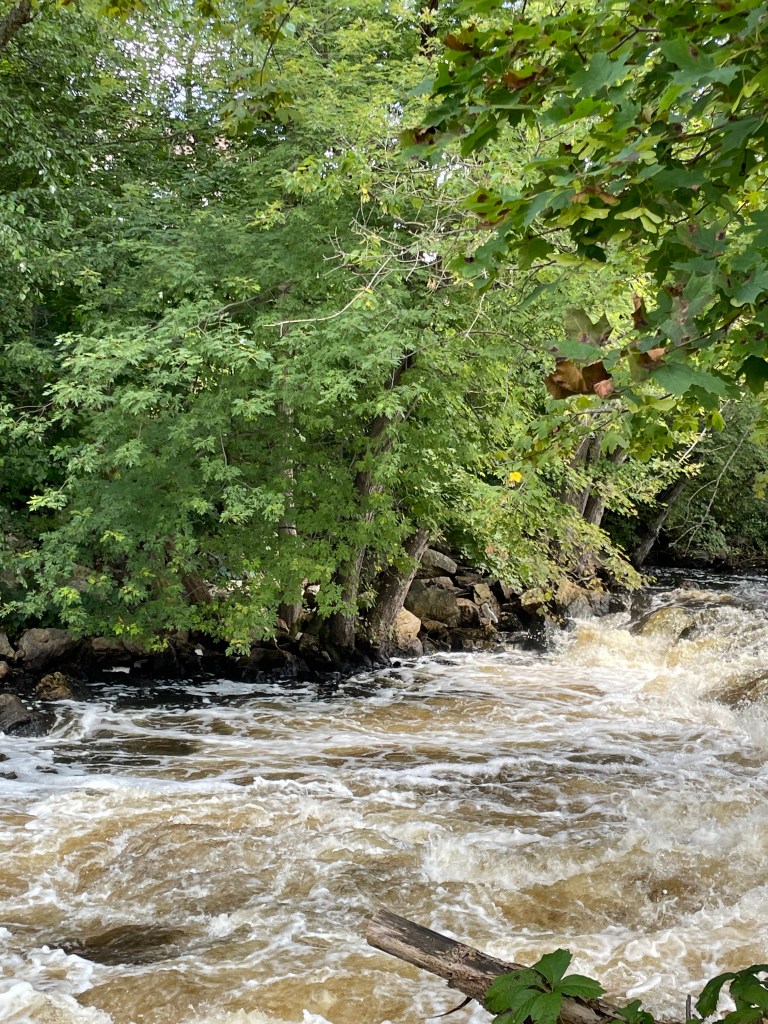
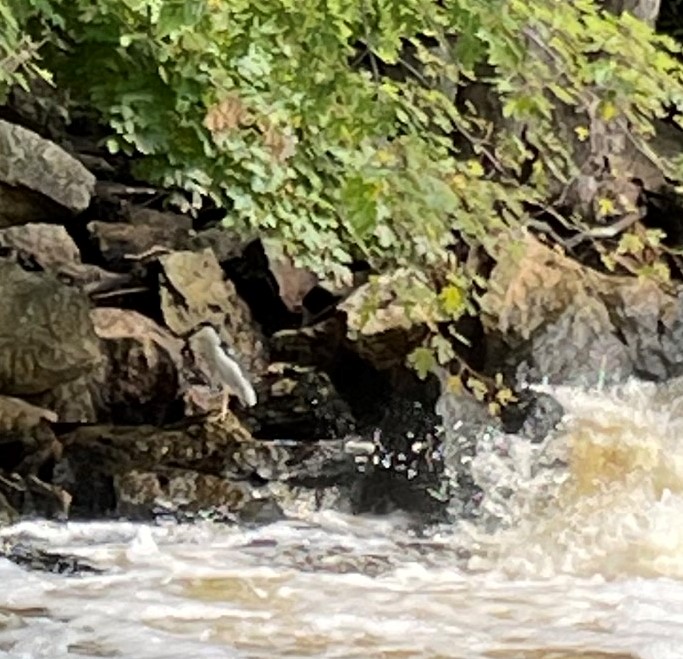
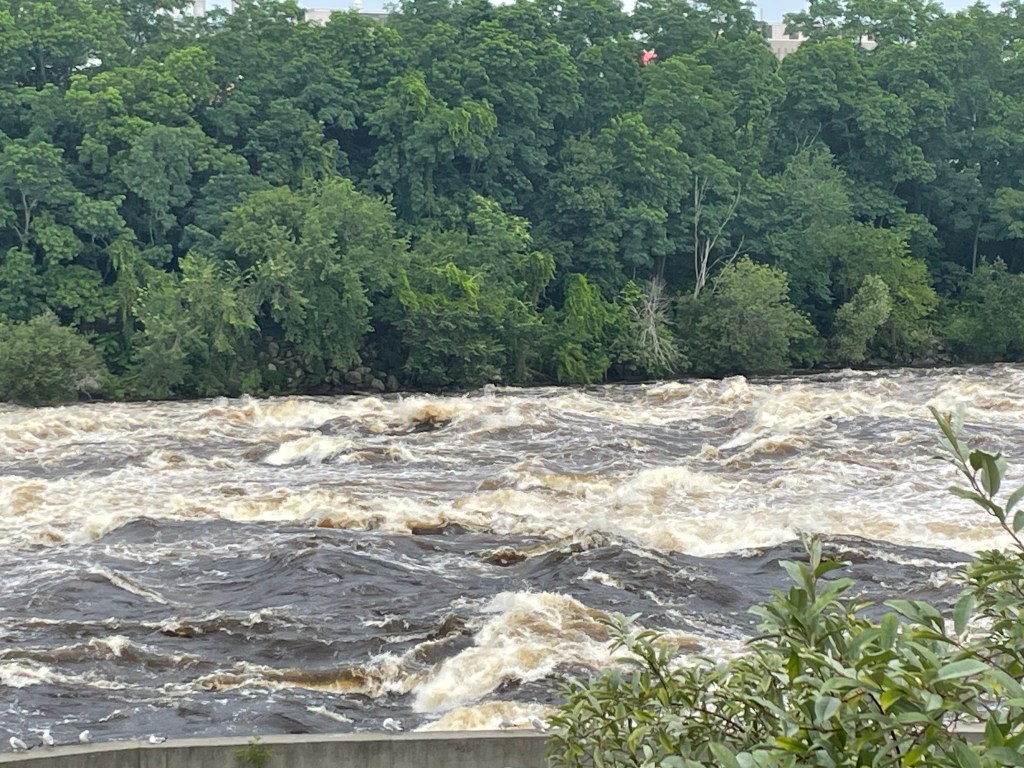
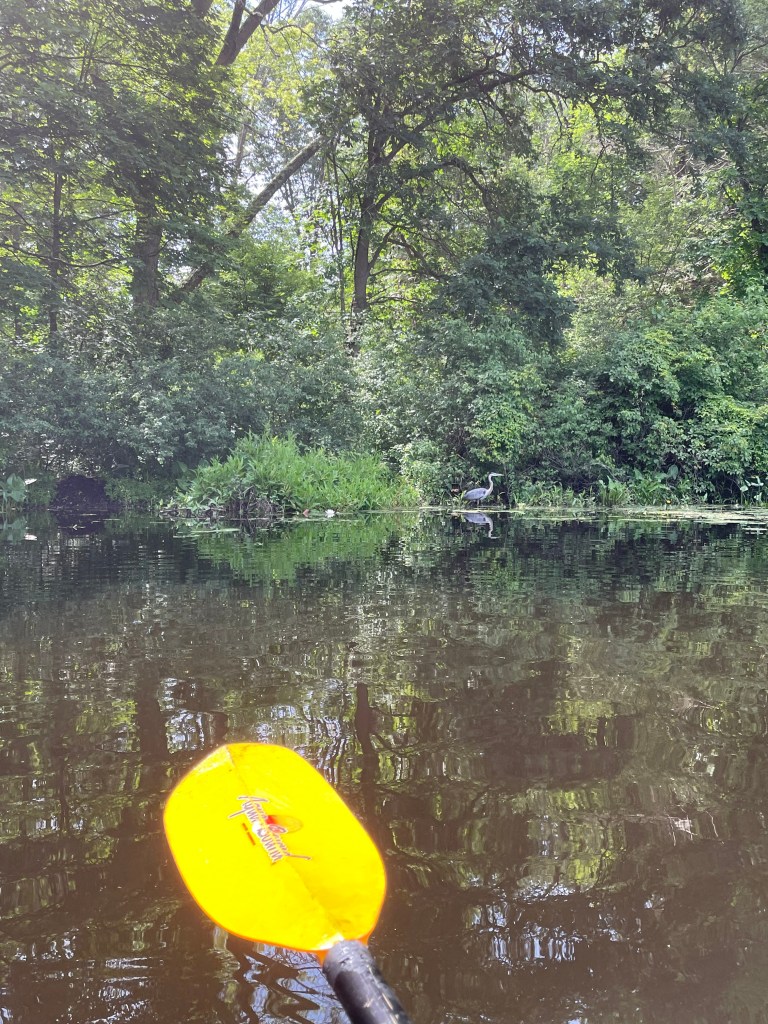
Pedaling along the Concord River, just before where it pours into the Merrimack River, at a point where it is sliced by a small island, which once was connected by bridge to the east bank, but now stands untrammeled except for one I-beam continuing the past of this place, I stopped to watch and hear the rushing of this river currently running very high along its banks. And I glimpsed someone else doing the same.

I’m guessing the great blue heron’s motive for water watching and mine were not the same.

What a day this has become! And, I will tell you, this the second post I began today. The first I discarded. It was not reflecting this day here in New England. Rather it was arguing my fears of our future, my fears due to our past.

But today, I am reveling in this present, our present.

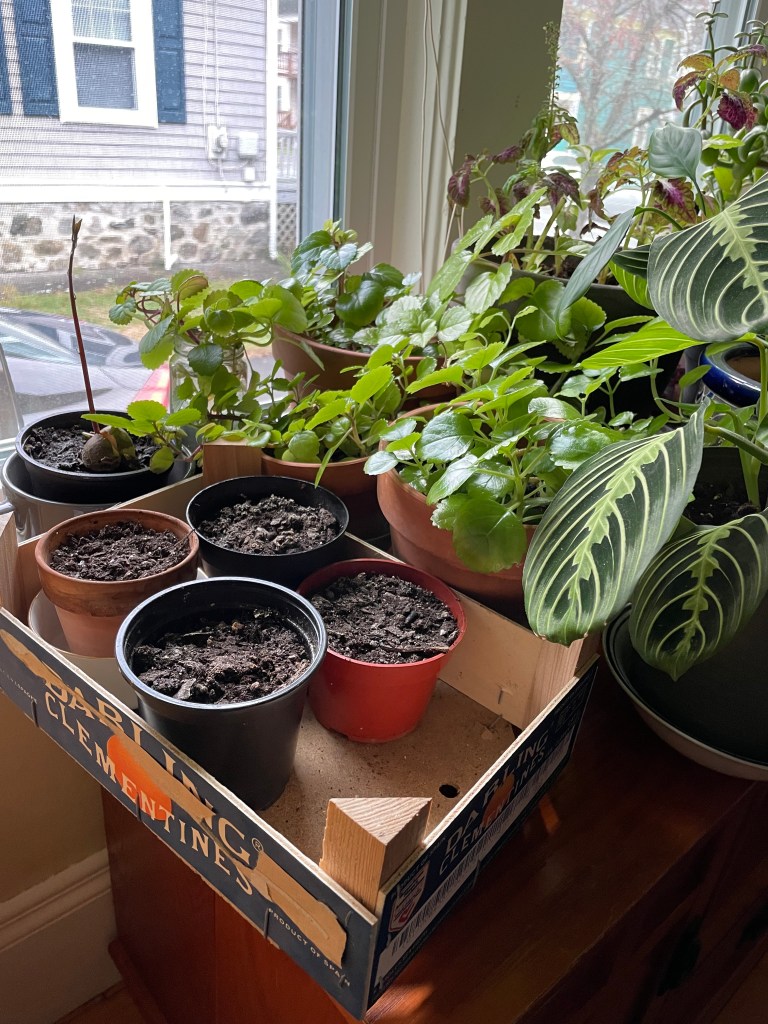
Have I told you this before?–Violets and their leaves are edible, and not only edible, quite tasty. My backyard abounds in violets. Each year they claim a few more inches (I would say feet, but the property just is, I believe 1/20th of an acre, and much of that is taken up by my house, driveway, and a shed. Beside the shed in the northeast corner receiving full noon to evening sun is my vegetable and rhubarb garden, which also hosts a huge stand of daisies, and in which I have now planted a tiny horse chestnut tree. If it grows, I will be happy. If it grows, I won’t have a vegetable garden, but rest assured, that shift in plant life is at least a decade from now. West of that garden space by several inches, well maybe a foot, is the plum tree I planted last year to replace the now absent beehive. Ah, I miss the bees. And west of the plum tree and as the yard becomes shaded by the dogwood tree, begin now, the violets, and they only stop when they meet the well overgrown but still recognizable triangle of bulbs and perennials — daffodils, tiger lilies, a few tulips I have pushed in here and there, soapwart, pinkweed,–, and a wild mulberry bush/tree, the fruit of which the birds robins and I think finches in particular enjoy. South of that triangle and continuing under the dogwood and onto and on the west edge of my backyard are more violets along with a smattering of ferns, until the grass that is holding firm just about level with the back edge of my house. Then grass decorated with ferns (I am pretty sure my property’s water table rides quite high below the surface). There are many other wildflowers growing there too, pink ladies, plantains, jack in the pulpits, lord, so many — I should bring the wildflower book out back and mark off all the varieties here.

Then just outside the westside kitchen window is a plant I bought several years ago at the Garden in the Woods in Framingham, Massachusetts. If ever you have the chance to visit there, do. It is unique and it is beautiful. The plant’s name I cannot remember, but its appeal to me was the fact that when it rains its pale green, scalloped leaves, resting horizontally beside each other, and slightly overlapping one another, hold rain drops aloft, like a table of dew drops, but it’s rain. Perhaps someone can tell me what this plant is?

South of this to be reidentified plant is a hefty stand of ferns, interspersed, right now with some rogue goldenrod. Just south of this stand of ferns is a very abundant stand of goldenrod, stretching along the house for two windows. There are other perennials that share much of the space the goldenrod reigns within, at other times of the year, toad something or others, lilacs, Queen Anne’s lace, some fleabane daisies, other wildflowers, and, in season, several different bulb and rhisome plants. Then there is a rose of sharon that is shedding itself a bit more each year. I think I have maybe two more years of its friendly white flowers with magenta centers. There is also a hydrangea that each year, as the shade from two large weeping birches expands, loses more of its share of sun, and flowers barely, maybe one maybe two blossoms. There are also sedum holding their own in the shade of those same birches. and increasing in girth each year are stands of lance corporals, whose red lance is just beginning to emerge now out of their tops.

The southeast corner of this lot, along the bottom of the driveway holds an unusual plum tree that rebirthed itself about 8 years ago, and fruited for three years, but did not fruit this year (nor did many flowering, or fruiting plants who time themselves with the peaches — an early spring start, that was rained out this year), as did not the azaleas that front my back porch facing the dogwood tree and the vegetable garden, nor my neighbor’s forsythia.

So I have taken you on a haphazard tour of my equally haphazard garden/grass/wildflower/treed property. And just want to remind you, the violets are delicious.

Thank you for joining me!

The fourth in a series of beautiful days here

Ahh, but predictions are–tonight it will storm. And I just got my basement almost dry — not fully, because the water table languishing under this house must be above its abilities to drink what has been given it for its thirst, and is having to share it with my house foundation. I am grateful it is not a flood here. I am also grateful it is not a dustbowl.

I have been reading Braiding Sweetgrass by Robin Wall Kimmerer. Reading it I am again reminded of the bane of individual land ownership on the health and well being of all beings–those who grow in place such as trees, and grasses, and all flora, those who by creation roam a terrain or airrain (such a word?) or waterrain (such a word?), and those who are us–what if no one owned, and everyone shared? If no one owned, would there be such drive to protect? Would there be a reason for greed?

A world without greed. How beautiful.

And respect. This from the book stays with me: “Someone (in a class learning the Potawatomi language) asks: ‘How do you say please pass the salt?’ Our teacher…. explains that while there are several words for thank you, there is no word for please. Food was meant to be shared, no added politeness needed; it was simply a cultural given that one was asking respectfully.”

Assuming respect. So often I see enacted, and undoubtedly enact myself, an assumption of disrespect from someone else, and gear up for it. And how does one gear up for disrespect? Either defensively or offensively–in each case with tension and distrust. How is that we live in such an uncomfortable state as our very way of life?

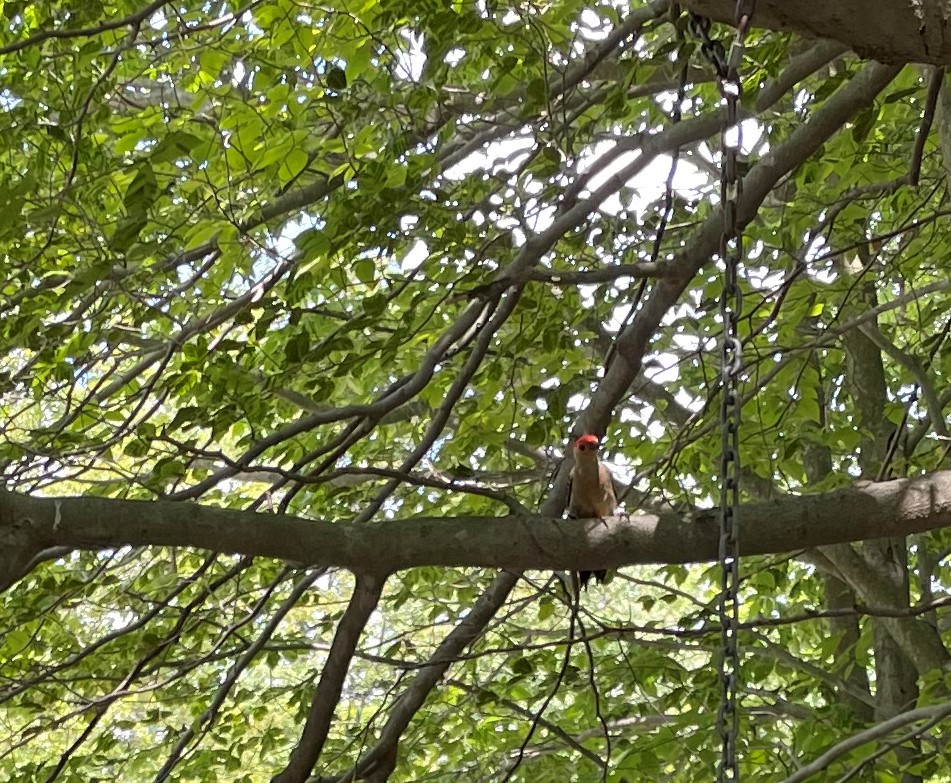
Male red bellied woodpecker in a beech tree, preparing to visit the feeder that is suspended from that chain.
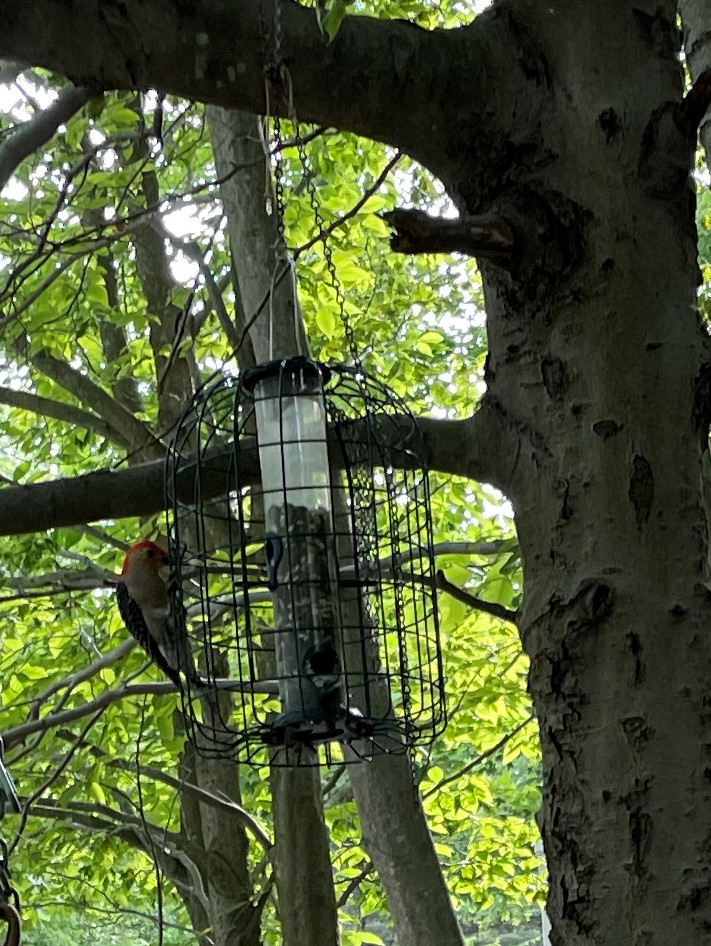
Red bellied woodpecker had to reach really hard to get at the food, as the cage openings were too small for him to slip through. He succeeded, but how much energy did he expend each time? And every other morsel he pulled out he fed to a juvenile, that he, and the female (no red on her head), were readying for his own adulthood.

Notice the bark of this beech. It is pocked. It is likely enduring bark blight, which has been damaging many beeches, a major tree in the US Northeast. Bad enough, but now! Now the beeches are being attacked by a leaf disease that is rapidly decimating them! The tree here is enduring it now. This particular tree was not affected last year.

“Historically, a blight called beech bark disease has been the primary threat to the species. But now, beech leaf disease appears to pose a bigger danger. First spotted in northeastern Ohio, it causes parts of leaves to turn leathery and branches to wither. The blight can kill a mature tree within 6 to 10 years. It has now been documented in eight U.S. states and in Canada.” [from the journal Science, on line edition, 10 November 2021]

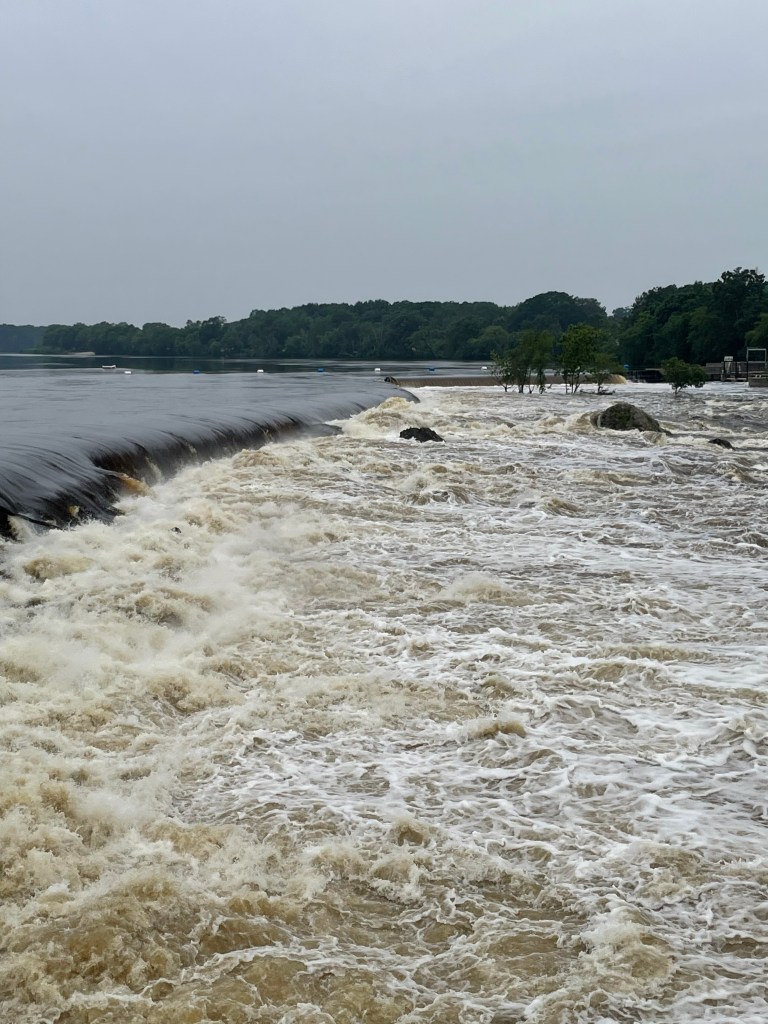
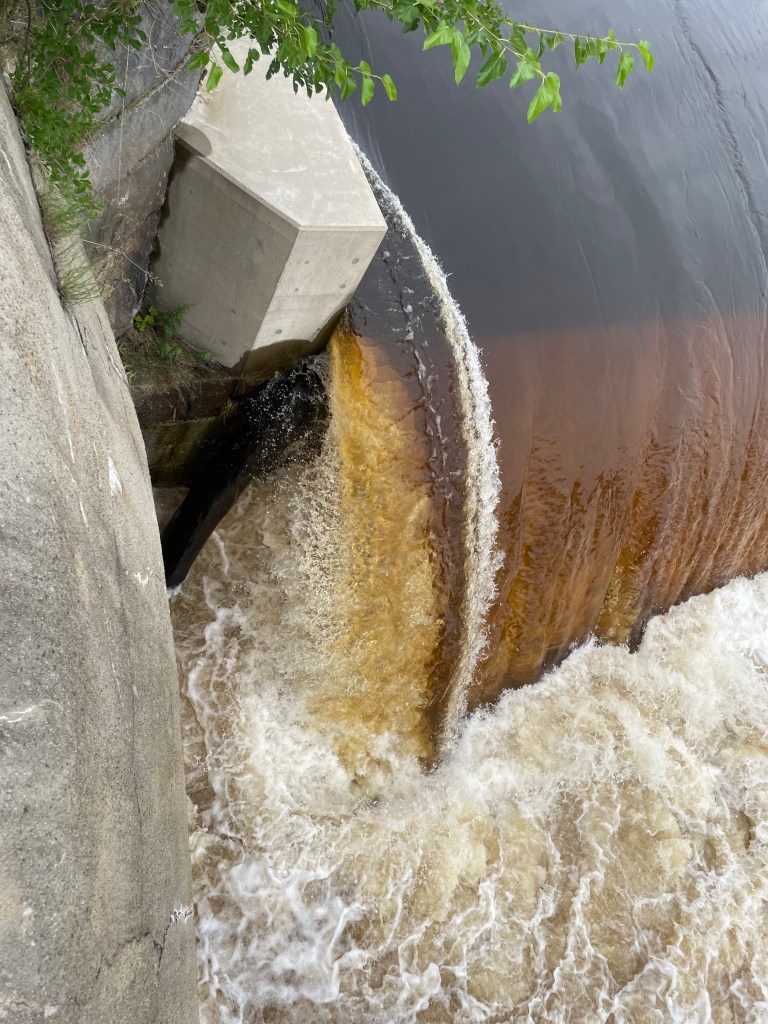
I will go to one more topic. The might Mo — the Merrimack River. She is a caged being, shackled here and there by dams, canals, purification plants (to undo what we discard) and yet she rules.

I have seen the Merrimack River higher, seen it breach its banks, but I have never seen it so much of a force. This was after the rains in mid-July that wreaked havoc upriver and in Vermont and western New Hampshire.

There is much to be concerned about. But there is beauty and through it there is hope.

It is nearly mid-July

It is two days shy of Bastille Day. Who remembers what was taught about Bastille Day in school? Is it still taught? Who remembers the title of Charles Dickens’ novel that pertains to the events surrounding Bastille Day?

Read this explanation from Wikipedia. Interesting contrast in the event(s) being celebrated year over year:

Bastille Day is the common name given in English-speaking countries to the national day of France, which is celebrated on 14 July each year. In French, it is formally called the Fête nationale française ; “French National Celebration”; legally it is known as le 14 juillet ; “the 14th of July”.

The French National Day is the anniversary of the Storming of the Bastille on 14 July 1789, a major event of the French Revolution, as well as the Fête de la Fédération that celebrated the unity of the French people on 14 July 1790

France is in much heat right now, every meaning of that word. What will it be like in France on July 14th, 2023?

Theirs is not the only country in heat.

The world is in much heat, again, every meaning of that word. How can we each participate in cooling the heats?

How can we cool ourselves off without offsetting heat caused somewhere else to someone or something else? How can we be cool? In every meaning of that word.

Can we envision cool or not-hot? Can we exhibit it? Can we find within ourselves peace and care and wonder and bask in and share it?

Yes, Alaska again, still.
sharing water and shade with a Great Blue Heron in an eastern Massachusetts river newly deep again because of heavy rainfalls. This was last week. This week it has shallowed.

I am thinking of how we opine. How I opine. What makes me so sure my view should prevail? How do I test it for validity? For value? For purpose? For accuracy? By what measure do I consider a differing opinion? Am I capable of learning outside of what I “know” to be? How do I “know” what I know? Can I get out of my own way to see what know is? Can I know what I know without my experience? Is knowing only experiential? If so, is it ever able to be all right? To the latter question I say I don’t think so.

So what to do?

Consider motive. Consider heart. Consider my motive every moment. Consider my reason for knowing and holding onto that knowing of a thing a thought a purpose a fact.

Consider getting out of my own way. Ask–ask who?–how to do that; if it can be done.

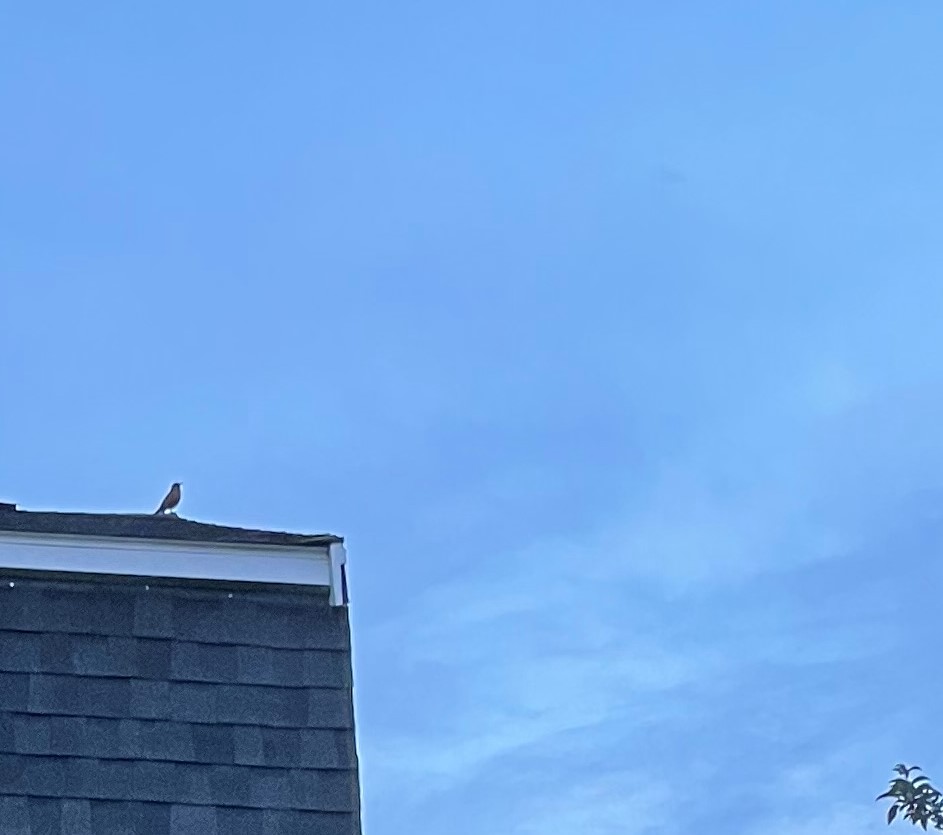
On top of my neighbor’s house, the robin sang and sang and sang toward the evening sky.

Joshua 24:15

More on the North

Yesterday someone asked me, are you going to blog about your trip to Alaska? And I said, well I did! I did, but it was topical on loss, on loss this earth and all its elements continue to experience. It started with delight, local seasonal delight but it drifted northwest of here and downhill (figuratively).

I will try again. I will tell you about what beauty there is there. What beauty there is and could be anywhere, seen by looking, felt by touching, heard by listening, smelled by sniffing, tasted by I don’t know, tasting! And we can attend with expectation of surprise, of something new, of beauty, of worth. We can, any time we want–expectation is, is it?, without precedent.

Many things I’ve read recently seem to be playing with the idea, the physics and the philosophy of what one perceives is very much the product of what one brings to the moment. The fact of objectivity is? therefore? not fact. We can’t get out of our own way.

Well!! see, I have veered off the proposed path, even before stepping on it.

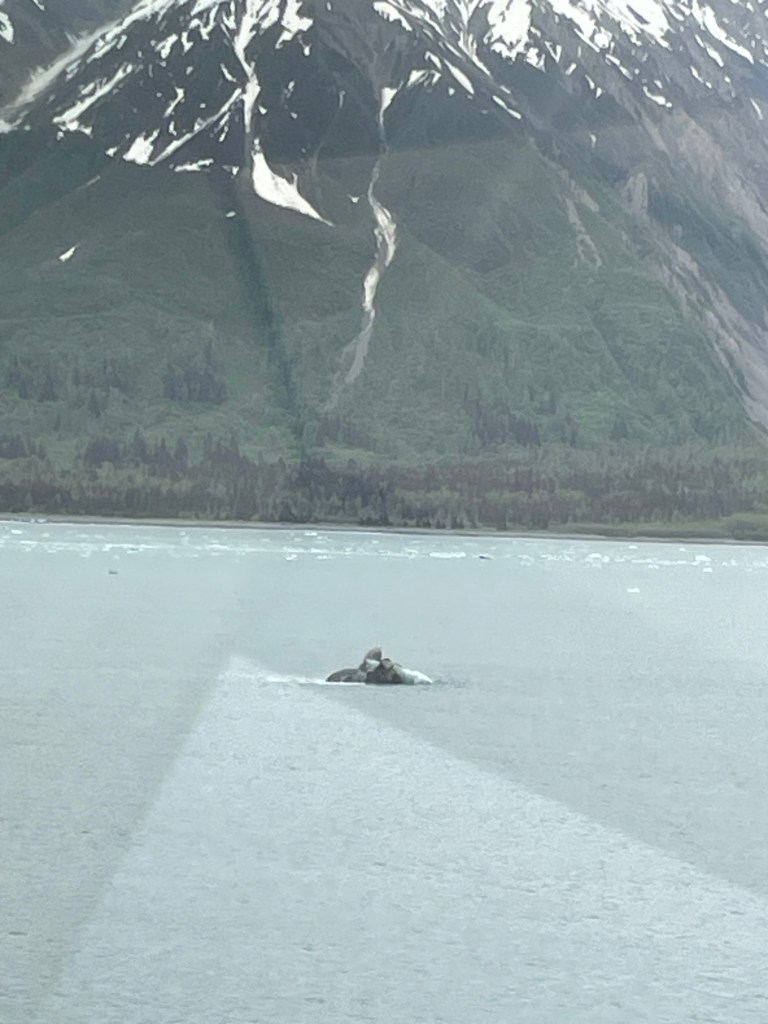
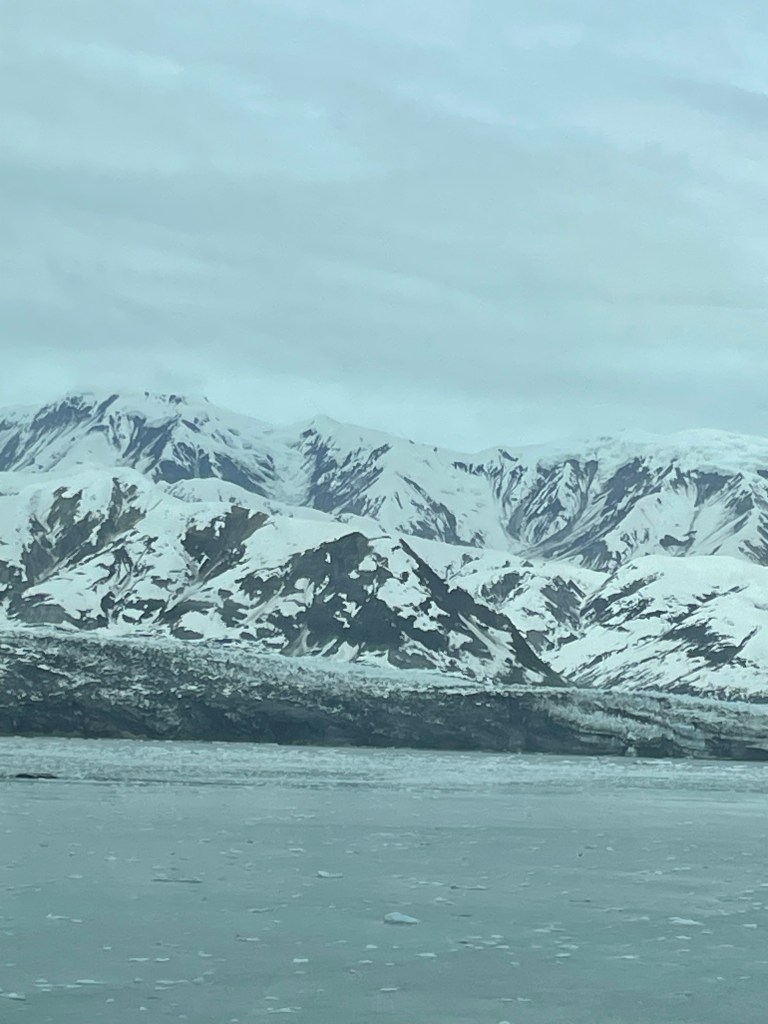
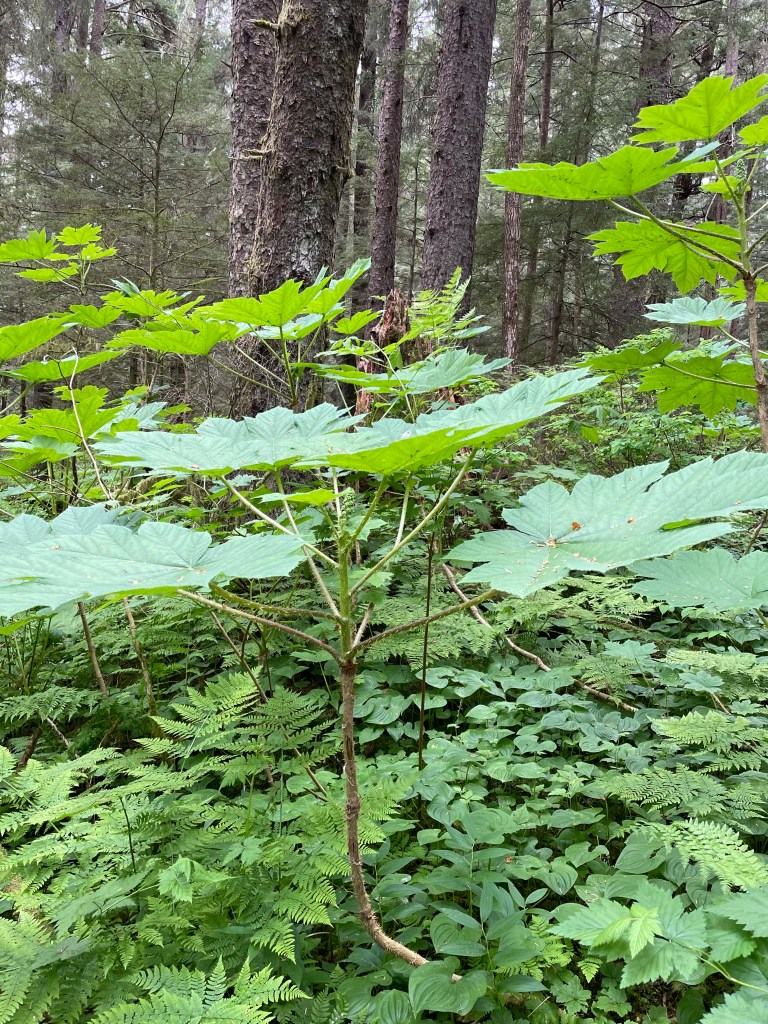
Alaska, the silence was what held me the tightest. These enormous shards in myriad shades of green, and the even huger white shards toss me into silence. Were I sitting among those trees. Were I sitting on that ice that snowpack, those boulders indigenous and erratic, and inclined my ear (inner and outer) toward an inch, a foot, 100 feet of it, I would hear myriad small, near and distant scratchings, hummings, huffings, and even whisperings. But at the feet of these giants, at their feet or far off in a body of water the dimensions of which I cannot fathom, I am placed in and brought to silence.

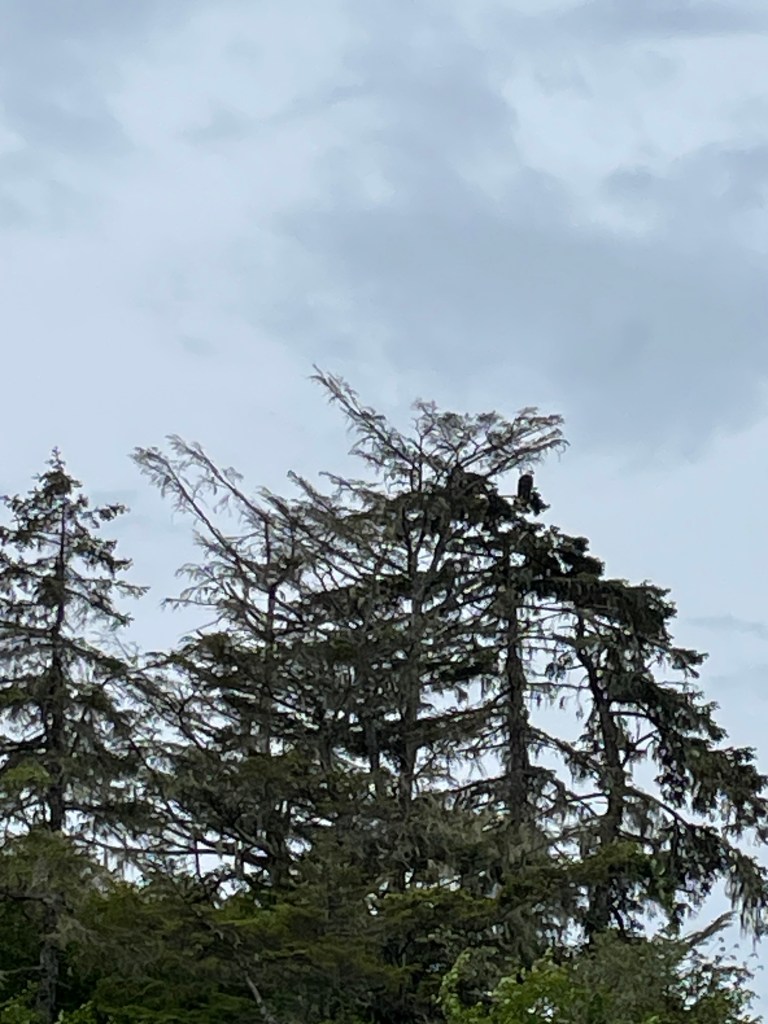
see the bald eagle? top right. huge.

It becomes June

June looks well in green. A color of shadows and shades. Emerald, jade, forest, mint, basil, sage, juniper, moss, chartreuse, pine… And June looks well in the lights. In buttercup yellow, lemon yellow, second round dandelion yellow, and rose red, and rose pink, and dutch iris lavender, turtle flower purple.

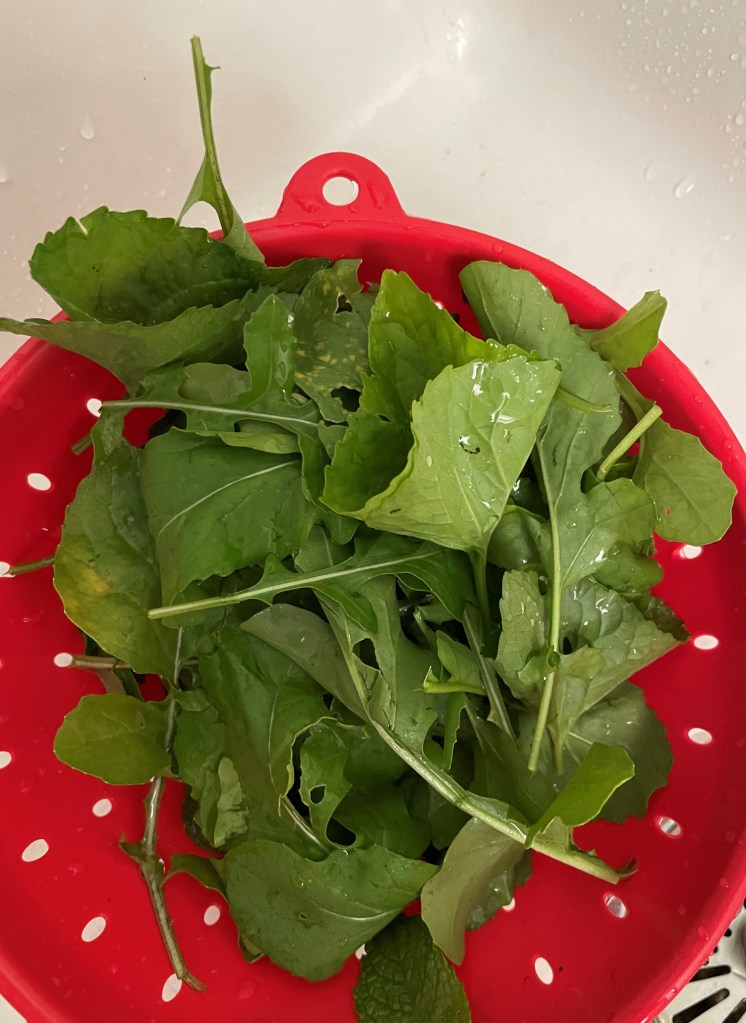
June provides robust arugula and round, red radishes, and tall, sturdy, umbrellaed rhubarb stalks, raspberries-in my garden, bird-consumed before they can recolor from granular green to ruby red, the sturdy, prolific meadow green leaves of violets, waving and bowing fully unfurled ferns. Dusky sage, blue-green rosemary, yellow-green basil.

Arugula, mint, violet leaves, radish leaves, basil, rosemary

In the Tongass National Forest, well, actually on the very edge of one island with the land masses and interspersed waterways within southeast Alaska that are within the designated Tongass National Forest-a temperate-zone rain forest, much green of cedar and pine prevails, as in Wrangell-St. Elias National Forest just north of it. But slashes of brown, where land has slid down the nearly vertical mountains, standing just back of the waterways on each island, spit, peninsula, jetty, jut, or continental edge, hurt to see, to know it is because too much water too fast hurtled down toward receiving waters uprooting massive, passive, wind whistling red and yellow cedars, whose roots do not need to go deep for their trunks to grow tall, but whose roots do need something to sustain them, to provide the mycorrhizal exchange of nourishment and to hold onto, that will feed them and hold them to (don’t we all need such), from which, with downrushing rainstorm streams, they are loosed and as a kid on a slide (smooth surface, no grabbable grit)–first the “grit” is borne downhill tumbling in the hurtle of water, and then the now unrooted cedars, are knocked back at the knees and they are trajectoried perilously downward.

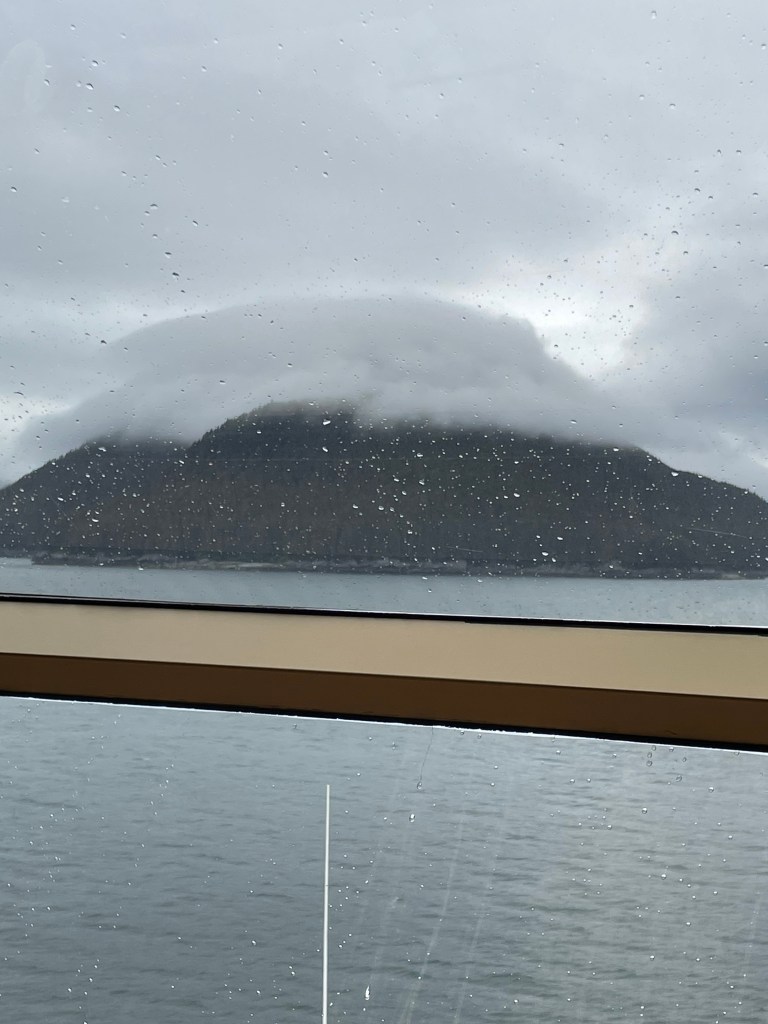
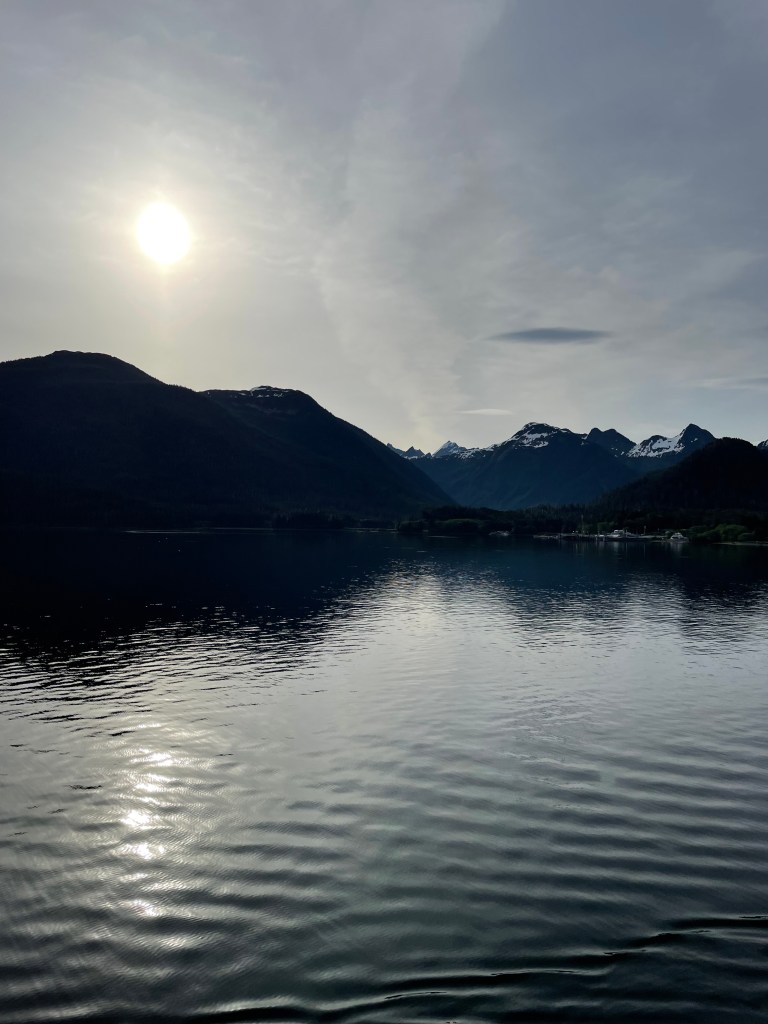
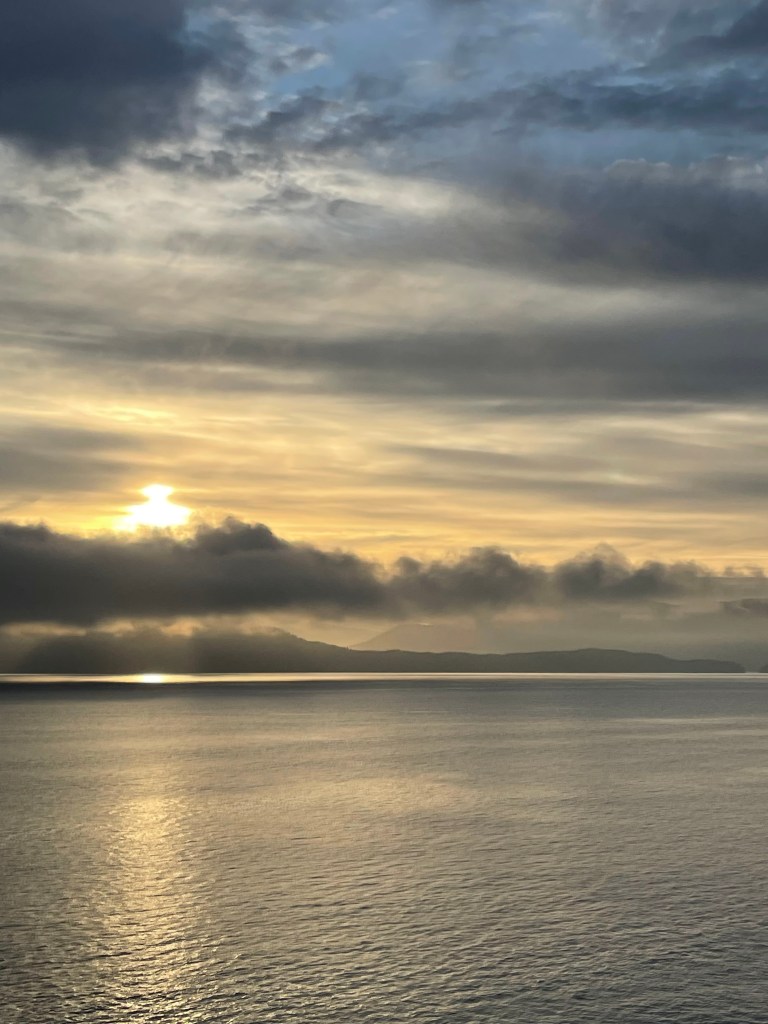
leaving Sitka

This is a rain forest you say, it is how it is. But at this latitude, it is also historically a snow forest. And, while rain totals in Tongass have risen in the past few years unlike most other parts of world, the heat of the worldwide drought is here too, and the snow totals have fallen far. Too far. No pack. No seasonal predictability. No seasonal order, random mishaps random disasters. Unfed until starved brown, cedars still stand tall until the insult-to-injury rainfall, and then they are uprooted and fall and slide.

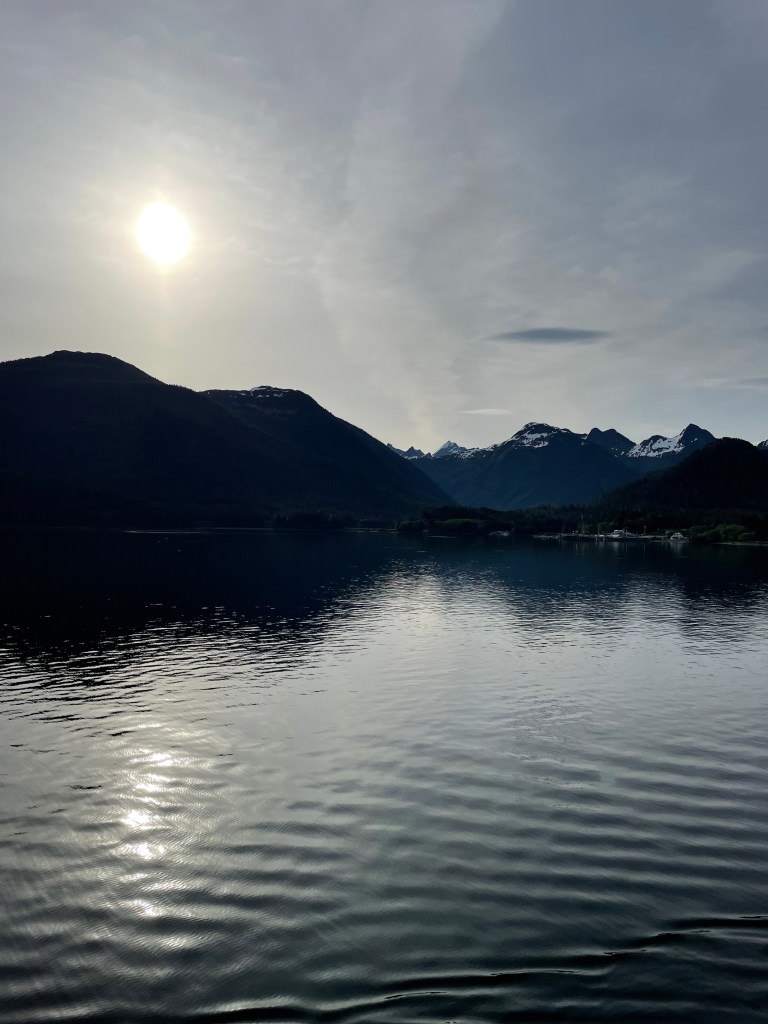
arriving at Ketchikan

I sit at my desk on this very becoming June day in Massachusetts. I wonder today at tomorrow. I wonder each day at the next. But first, before I concern myself with that, I wonder of today.

May you. Because to wonder wants to learn, but also wonder wants always to delight in. May you.

Each day is

This morning, I bicycled to a local not for profit urban farm market to check out their annual sale of plants to buy. I bought a four pack of cherry tomatoes, figuring I could figure out how to carry those safely on my bicycle (two options I knew to work, gingerly–bungee corded to the shelf over the rear tire, or carefully held in my ever-present across the chest “shopping bag”). I considered buying eggplant and pickling cucumbers as well, but knew better. There would be a challenging pedaling home the two miles to my house, a good portion of it up a pair of challenging hills–the cost of buying at a farm market at river’s edge and living in “the highlands” of my city. The name is accurate, the ride home from anywhere local is some amount of up hill.

Anyway, I was waiting to pay for my four pack of tomatoes, when a neighbor appeared beside me and seeing me holding them and my bicycle helmet, said to me, “I will take your plants home for you.” You can’t beat that. What a kindness. So I got to meander home along the river and watch it fall over the Pawtucket falls, and listen to and spot the myriad warblers, some passing through and some hanging out for the summer, and the song sparrows, and the warbling vireos, and the redwing blackbirds, and the robins, and etc. It was a lovely, leisurely pedal and for the uphill parts I didn’t have to be conscious of any items on the back of me or under my arm.

And!! The clouds held out as merely clouds until I was two blocks from home, and then only released some drizzle until I was able to put away the bicycle, prepare the soil for the four arriving plants, then receive the plants, visit with my neighbor for awhile, and plant the plants! Only as I was patting down the dirt around the final tomato plant did the rain kick into a downpour. You can’t beat that!

What a day.

And!! I am counting herrings at the fish ladder again this year. And by happenstance, three weeks ago when I set up my schedule, I didn’t choose today as a day to stand at water’s edge and count! So far, my days have involved only sunny/clear or 3%/25% cloudy (two of the options we have for reporting weather conditions on the phoneapp that we report our sightings on). Two recent ones incorporated a bit of a chill, actually a big chill, but, really, complain? Not I.

And the rain falling steadily outside my window. NEEDED!! And beautiful. I did dawdle outdoors after finishing the tomato plant placing, and did get very wet. But, it was my choice. And indoors was 7 feet away from where I stood.

What a day.

You can barely see them, but there are two ducks–male mallard on the horizontal log, female mallard kicking up a storm to stay on top of the falls, and join the male on the log. The male had just achieved the log, as he, too, had been kicking against the falls. It as fascinating to watch, and their legs don’t even burst with muscles.

The other day, one full of sun, in a very small space of a pretty small bog/pond, we spotted a very long but tightly wound around itself water snake, gorgeous wet brown skin glinting in the sun, two notable frogs noses and backs above water line, two substantial turtles noses above the waterline, so many water happy plants, a fish or four, a party of red wing blackbirds, robins, chickadees, titmice, warblers, an oriole. What a day.

See the frog?
Can you name this water grass?
Cinnamon fern–seed bearing, and non-seed bearing shoots
Bog walk to the pond

May your day be one that is.

It is morning. It is morning!

I sit at my desk watching the weeping birch, which seems to have finished leafing out overnight, whisper and wiggle in the morning breeze. It is a lovely sight. An occasional gust shoving through tells me that my bicycle ride later this morning may require some periodic pedal pushing (like that alliteration?) but I am up for it.

The other day traveling the local rail trail, I heard and, with a persistence I don’t always put forth, saw an orchard oriole! My first. What is an orchard oriole, you might ask? It is a slightly smaller version of a baltimore oriole, and with a deeper orange, rust-toned, ranging on robin red breast. And the one I saw and another higher in a second tree somewhere to my left, called back and forth “chirrup, chirrup”. When I got home, I pored through my various bird books, and the electronic sources to verify my sighting. No one mentioned the chirrup, but indeed, that is the word they both were speaking to me, to each other.

If you have a loupe, scan this photograph millimeter by millimeter. The orchard oriole is in it, somewhere!

So then I started to look for, and find, birds’ nests. Periodically, perhaps annually, but I think not that often, I think to myself that I am going to study and be able to identify birds’ nests with their creators. I don’t seem to follow through on that self-imposed study subject. Here are two. Can any one of you identify the maker?

Perhaps I will take up the study, once again. Perhaps I will follow through this time.

You know, if I don’t see the bird making the nest, I am lost. And this is exacerbated by the size of the bird vs. the size of the nest. The mourning dove nest I saw in my neighbor’s tree a year or so ago looked only sized for a sparrow, yet it comfortably seated two doves and eggs. It gives me pause about how much space we seem to think we need for our own selves. We do take up a lot of room, and a great deal of new material for our structures, whereas birds and ground fauna make such effective use of fallen twigs, catkins, dirt, grasses, feathers, trash!, fur, hair, leaves (in my neighborhood, and probably anywhere, squirrels make very effective use of oak leaves, those tenacious oak leaves, which I use as winter cover for my flower and vegetable and shrub beds).

I need to admit, if I haven’t before, one year, many, many years ago I was stashing combed cat fur in an accessible place out, thinking to offer the backyard friends nice, warm nest material. Well they never took it. Well, of course!! Cats are a menace. Smell cat fur, know threat. So I stopped that practice. Now, as I know I have mentioned before, I just grow vegetables that many flighted and grounded backyard friends consume with and for me.

So what are you noticing this spring? What is local and a bringer of joy? Maybe touch a tree today. It’s grounding. It’s pleasant.

Oh, and just because, here is a photograph of a constructed owl, overtopping a newly completed trail crossing of the Concord River. The story provided was that when the mills were everywhere in Lowell, clanking, lurching, huffing, clinching, puffing, reeking, creaking, creating and destroying simultaneously, and using the talents and lives of mill workers, the mill girls who used to stay in boarding houses were “watched over” a watcherwoman per house. Also resident in many of the the boarding houses, up in the attics, and their environs, were barn owls. They provided their own type of watching over and protection against unwanted beings. So, to denote these “protectors” this fragile, yet imposing watcherwoman owl has been constructed. This owl has solar panel eyes, so at night they light up, which is pretty cool albeit a bit eerie.

I’m going out now. Maybe I’ll see you in my wanderings as I do in my wonderings.

May all be well. May it be so.

Simultaneity of death and birth

The idea of this title came to me as I ambled through a woods named for, most likely, the last private “owner” of the property before it was let to lie fallow, to grow a forest of its own, and to become a Conservation Land of the town it is within the bounds of. I am grateful to this donator. This last owner’s death enabled the birth of this space of white and red pines, white, red, and black oaks, big tooth aspens, some hickories and a black walnut or two, some red and silver and sugar maples (the sugars, by the way, are probably in their last stand, being, as they are, trees in need a colder climate than is now provided in northeastern Massachusetts.), of flowering shrubs perhaps remaindered from the once groomed property, of skunk cabbage and small meandering waterways all leading to a nicely misshapen pond on which today floated, dabbled and dipped canada geese, mallards, and common goldeneyes.

I took pictures, some, which brought the idea to me, and some because the idea was now with me.

On this, I think rhododendron, on the same branch last year’s flower-seed pouch deflated and this year’s burgeoning

I thought of it some more and understood something, death is not only simultaneous with birth; death, readily when untrammeled, effortfully when bound, supports birth.

Rootball of fallen tree, grasses, new and past deckle it, skunk cabbage sprouting beside it in its offal, deep rich dirt plastered within the aimless roots, seeding who knows how many flora and feeding who knows how many fauna?
In the midst of new forest–pines, cabbages, shrubs, oaks, aspens–old–years of oak leaves and pine needles, and resting on the nest it is creating, a fallen tree, likely oak
Lichen, moss, ferns, pine–I think red based on needle per bunch count– emerge from and merge with once oak, once pine.

And. To live is to dance. This aged balletic elm, dipping back to the water alive with new growth, awes me with her flexion.

Then this Camperdown Scotch Elm below, cobbled, hobbled in the Boston Public Garden; God knows her history–perhaps intentionally imported, perhaps rode in on the boot of an intruder; sits reborn within herself, and that reborn self well aged, but never, I just read, grown tall. She is a wych elm cultivar, and known for being short and offering twisty, weeping branches….

Then there is the Beech, ah the Beech. Look how she reaches for sustenance and for places to root again and again, so abundant in the woods, so diligently sought and exposed to possibly deadly abuse and absent natural protectors in the manicure of a manmade space.
And yes, the bald cypress, doing what she does — popping baby cypressii around her circumference.

Psalm 57:5-6
Be exalted, O God, above the heavens.
Let your glory be over all the earth.

They have set a net for my steps;
my soul was bowed down.
They dug a pit in my path
but they have fallen into it
themselves.

Before March marches away

How beautiful is the murmur of a cluster sparrows crowded in a shrub. I often pause to listen. I also try to see them, the so many of them, seems like hundreds of voices at one time. Usually I only can glimpse 10 or 20. Somehow they become the branches, twigs, and last year’s brown and this year’s deep green leaves. Hundreds and they are mostly only voices confusing my scanning eyes, delighting my attendant ears.

How beautiful is the roof peak song of a robin; the tree top trill of a house sparrow, and a competing purple sparrow; the clear, high in the maple song of a cardinal. How exciting is the first of the season pronounced song of a song sparrow; the crik crik awwwk, weezoo of a redwing blackbird; the sweet phoebe of a chickadee, who has spent the winter chattering and scolding; the alto and alternately accented phoebe of an eastern phoebe.

The mourning doves pick up the frequency of their moans. The mockingbird has added at least seven more mimics to its repertoire. The goldfinch chuckles as it flits branch to branch, tree to tree. The nuthatch notifies me that it is zooming into its target. The downy woodpecker kind of chortles as it bobs from branch to branch. I imagine the titmouse balancing sturdily while calling teeter teeter teeter. The blue jay’s call is lost in the raucous ruckus.

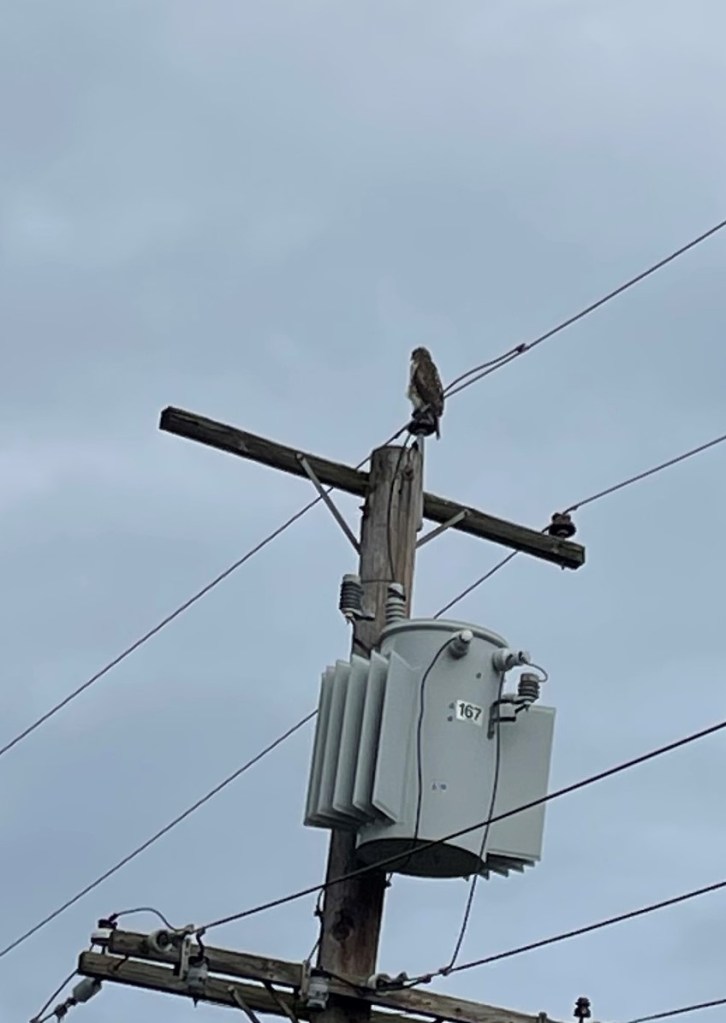
How ominous is the red tail hawk’s creeeeel; the rush of the cooper’s wings through the underbrush; the grackle’s crackle; the visible music of seven vultures wheeling above our streets, our tallest trees, our ominous office towers.

A near susurration of starlings briefly disrupts the cloudless blue sky light.

I ask you to envision these things. I am providing no photographs for them. I know you can. In some combination, some accumulation, they are our neighbors, whether we live deep urbanly, semiurbanly, suburbanly, rurally. They thrive with us and despite us. They are another of the gifts on this place called earth, in this case the place on earth called eastern Massachusetts.

But I provide this photograph. I happened upon this pair just walking along during one of my meanders.

I don’t know. I’m pretty sure they’re raccoons. They were a golden brown in my line of vision. But I have seen a picture of a brown skunk. But!! Do skunks nest up in trees? I think not. I’m going with raccoons.

As I am sitting here, the wind is picking up, clouds are moving in. Oh dear. I had intended on another walk today, with a goal in mind. But after a cup of coffee (which is brewing as I type right now). Not sure the weather will be so patient. Perhaps I will put my coffee in a to-go cup, I have plenty!! You know, when the legs want to walk, how can the head say no?

Maybe I’ll just put in a row of arugula seeds. And a row of pea seeds. It’s almost April. Why not?

When I Wonder

When I wonder, I find myself popping up in such diverse thought sources, all at once in a jumble sometimes; in sequence other times. I have yet to understand the decision process in me that attends to which, when, and why.

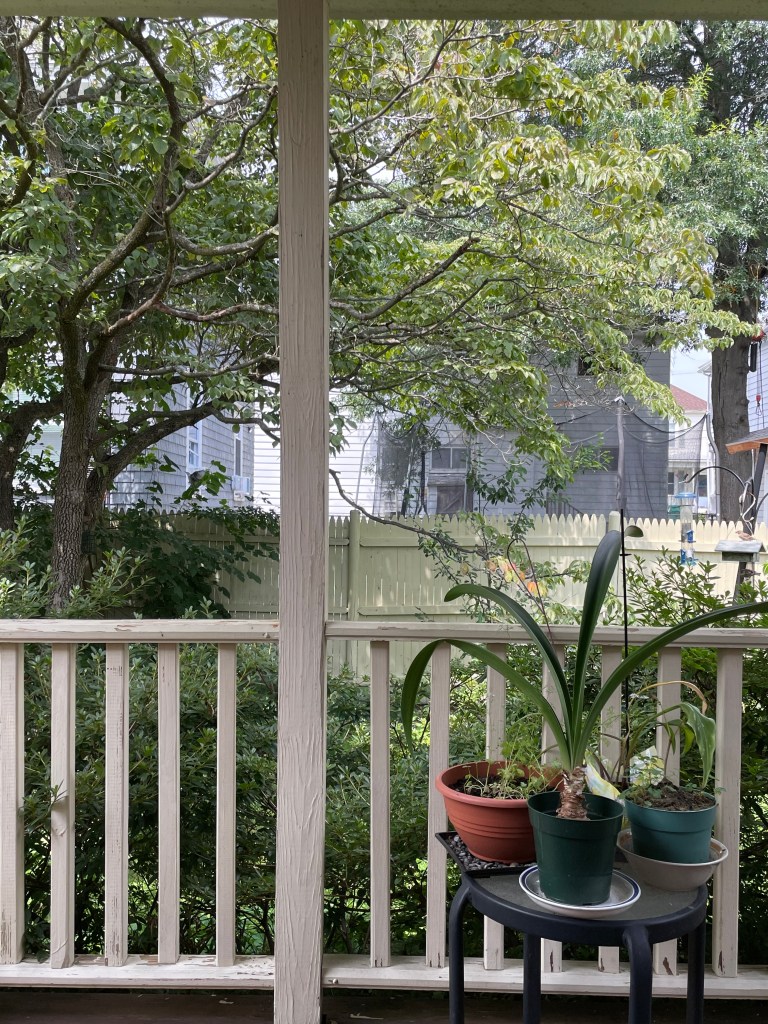
This is the corner of my room, beside my desk. Often I stare here, when thinking, or not.

Where do thoughts come from? What is the reason we focus on this one, and allow that one to slip away?

Right now a mourning dove is poking her head up from the evergreen shrub in front of my house. She seems to be looking at me. With concern, I would say. A little bit ago a second mourning dove sat on the porch railing doing the same, while she, the one poking her head out and facing me was flittering around within the shrub. Most likely, as you probably already surmised, they are planning a nest in there. I meant to trim that shrub back, and the other three, at the end of February. I didn’t get to it and so now likely will have to forego the trimming once again, and these four shrubs will continue ungainly in their shape. So it goes. As I type these words I can hear the “mourning” call of the dove out on the side of my house. The one in the shrub left and the other one as well. I think they are awaiting my departure from the desk in front of the window.

I wish I had a naturecam (or whatever they are called) to watch for me while I go away and give them their privacy.

The snow is melting rapidly in this morning’s bright sun such that I have several single-strand waterfalls from roof to shrubs. Like streams of diamonds falling, falling.

Well, I hear them both mourning now, and one just did a low flyby probably to check on whether that large, bespectacled face remains behind that window, and those fingers are still flying across the keyboard. Yup, I am here.

I think I will leave them be. I’ll be back to you. Right now, closing in on 10:00 AM, Monday, March 6th, 2023, I will take a walk. There are errands to accomplish, and what finer way to do them than walk! (Well there is bicycle, but not with the level of roadway encroachment by snow right now. I have a modicum of common sense.)

And now it is 1:00PM. The walk was ideal. The sparkle in the air, in the sunlight, on the snow, even on the bare branches.

This late season snow, for which I am grateful, if only because we’re in the climate that expects it, and it’s the season for it, and it hasn’t noticeably undermined the seasonal bodies and activities of local flora and fauna. It does keep me more local, but only because I really do not like to drive in snow. (Why, you ask, do I live where I do, then? I ask and answer, it is beautiful. And driving is not the end all and be all of my life, thankfully.)

May I share who the snow has enabled me to discover have visited me in several overnights. These are from left to right rabbit and cat, (and me), raccoon, junco. Yet another gift from the snow-a natural naturecam.

Thanks for reading. May you this day delight in something new to you.