Morning Has Broken Like the First Morning

Imagine that. Imagine the first morning.

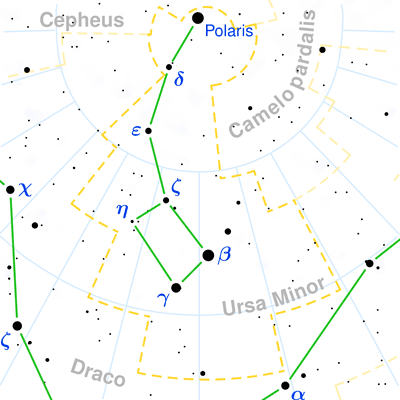
It is 2:24am. It’s been awhile, several years since I found myself wide awake and dawn hours away. I went outside to see what I could see of the sky. Took some maneuvering between streetlights, across-the-street neighbors’ safety lights, and other neighbors’ inside-the-house lights all thrusting their respective glares, but, standing in my driveway within the shadow (yes even in dark, shadows) of my house and my easterly neighbor’s house, making binoculars of my two hands wrapped around the perimeters of my eyes I saw ursa minor over the backyard, and turning around I think I saw castor and pollux bright behind me over the street at my back. I took a picture of ursa minor. Three stars in their line showed up on the picture, that was the range my phonecamera could capture. But you know what else, was it dust in the air local to my body, ground level air interfering with my photograph, or, was it atmospheric dust a few to dozens of feet above me, or was it billions of stars littering, making impossibly ununiform the rest of the picture my phonecamera captured?

I don’t know. I tried to upload the photograph from my phone to my laptop. The software will not let me. Too dark for my laptop’s eyes. I leave it to you to try this yourself. Step outside, stare at the stars you can see, take a picture, look at the picture, what else do you see? Look up at the sky again, what more do you see now?

This was the night to do this, perhaps that’s why I woke up. It is the first not full of clouds day and night combination in quite awhile. And, at 2:24am the wind had gone away too. It is now 3:44 (I spent some time looking through my National Geographic Pocket Guide: Night Sky, and some time watching/listening to Cat Stevens/Yusuf Islam youtube videos. I am fan of his, and I believe I have all but one of his Cat Stevens’ albums from the 1970s. It is 2024 and Yusuf is still singing with a voice that is almost identical to 1974.)

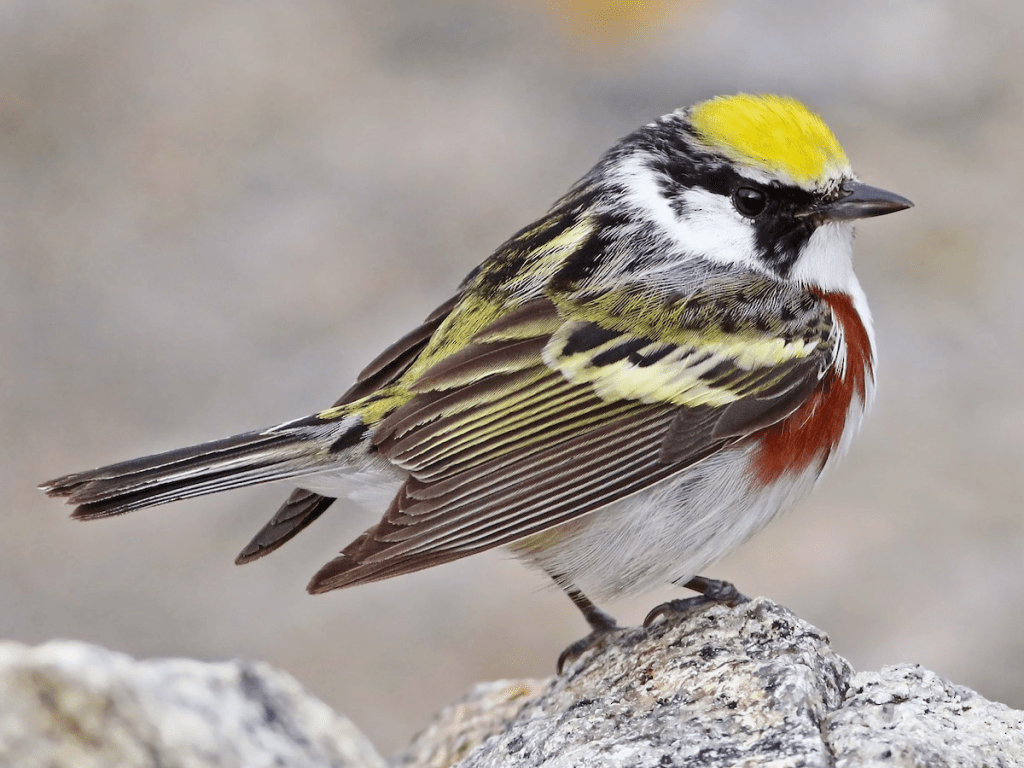
Morning has broken like the first morning, blackbird has spoken like the first bird. Praise for the singing, praise for the morning. Praise for them springing, fresh from the Word.

You can find the rest of the lyrics to this song of his online. It’s from his album, Teaser and the Firecat. I read that this song’s origins are in a Scottish hymn.

How has your March been so far? The other day I was walking, bending against headwinds and suddenly it occurred to me–March!! March winds storming in like a lion and lilting out like a lamb. When was the last time that elementary school lesson spoke to me? And how has it taken so long for me to recognize the factuality of that little phrase “in like a lion out like a lamb”? So much of our learning is grounded in life lived. We need only open up and understand.

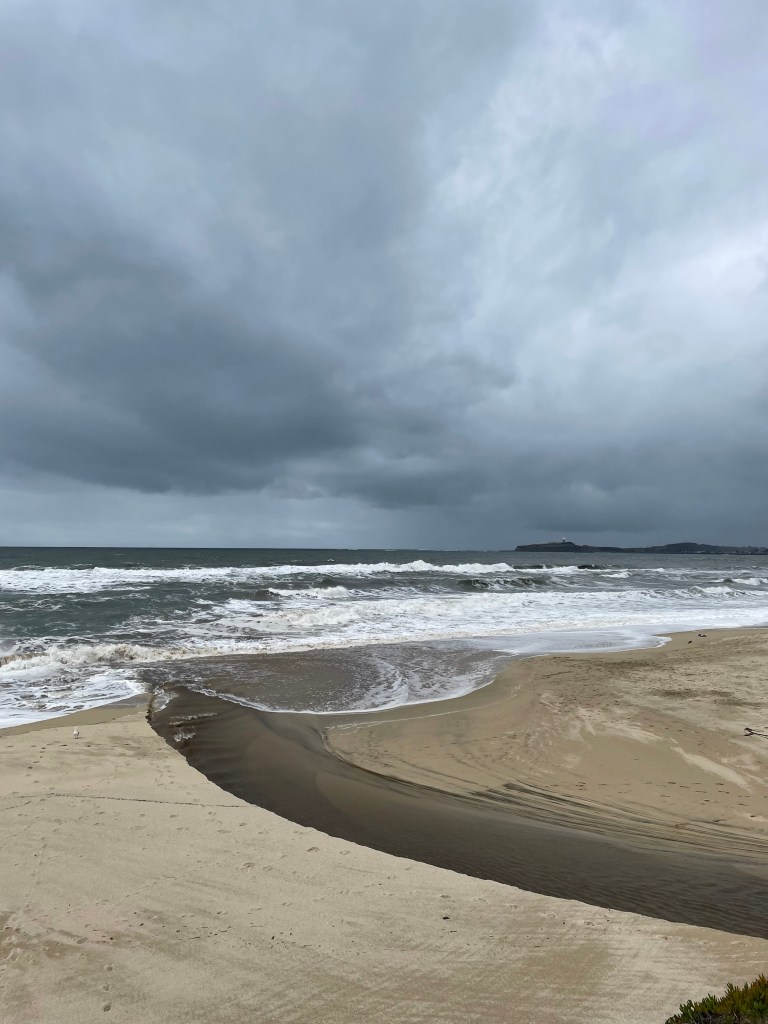
A week ago I stood at the ocean, buffeted and pelleted, but awed.

This morning I stood in still air, tossed by nothing, and yes, awed.

The following is information I found on Seasky.org

Ursa Minor contains only 3 stars brighter than magnitude 4. Polaris, the North Star, is the brightest with a visual magnitude of 1.98. It is a multiple star system that contains at least three individual stars. It is located about 434 light years from Earth. The second brightest star in the constellation is Kocab with a magnitude of 2.08. It is an orange giant star that lies about 130 light years from our solar system. Pherkad is the third brightest star with a magnitude of 3.05. It is a yellow-white giant star located approximately 487 light years away.

The constellation Ursa Minor, the little bear, is visible in the northern hemisphere all year long. It is a circumpolar constellation, which means it is visible all night as it rotates around the north celestial pole. It is a small constellation covering an area of 256 square degrees. It ranks 56th in size among the 88 constellations in the night sky. It is famous for a group of stars known as the Little Dipper and for Polaris, the North Star, which is located at the tip of the dipper’s handle. Polaris is called the North Star because it is the closest star to the north celestial pole. This means that as the Earth rotates, Polaris appears to remain stationary in the sky while all of the other stars rotate around it. Because the Earth wobbles slightly as it rotates on its axis, Polaris will not always be the North Star. In about 14,000 years the north celestial pole will point away from Polaris and toward Vega. This process is known as procession. Polaris is an important star for navigation, allowing mariners to easily identify their latitude

Imagine that.

4:34am. Sun will rise at 6:59am.

Like the first morning.

Why?

Years ago, in the last century–how odd it seems to say that, and yet, history is then and that history includes much of my life, and some amount of yours, if you are not a child of the 2000s–I wrote and occasionally saw published short stories. I liked writing them. I diligently researched, through the extant writers’ markets periodicals or literary and small press periodicals themselves, a place to submit my stories. I received probably hundreds of rejection slips or, one step up–letters. In the mail! In the SASE’s I would enclose in the 9×12″ envelope with my submitted stories. But I also received acceptances, and two of them may have paid in something other than accolades or a free copy of the publication, paid, rather in a modicum of cash.

I do not write short stories anymore. No, not totally true, I have, in the 2000s, written one completed short story, two nearly completed before I quit, and about five false starts. I do not know why I stopped. Perhaps my imagination quit. Perhaps I could no longer think out a life, or a day in a life of a character whose name and identity began entirely in my head.

There are other things I have stopped doing, things that for a span I couldn’t get enough of, and then I would realize over time that this thing I do, I don’t anymore.

What is that about us? I mean, I know I am not the only one here who has ended a practice, a pastime, a hobby, a thing from which I derive pride, or satisfaction, or pleasure, or learning, or, or any combination of these responses. Why did its draw run out? And why did another’s enter?

Where have you not explored that you might want to? What have you not tried? Why? Why not? And someday perhaps you will. Why?

And what makes one keep up with what one does?

And what determines our subject(s) of interest? Is it genes? Sympathies? Concerns? Education? Friends? Neighborhoods? News? And what shapes our opinions and how tightly we hold them?

Have you ever quit a closely held belief? Faith? Hope? Why? Have you chosen a belief, faith, hope? Why?

I did. Why? Because I recognized the need the importance to become someone-me rather than the present someone-me. Of this choice made many years ago now, but in this century, I am glad.

Why not? Let’s….

hello

A song comes to my head with the word with lower case head–hello. Initially I attribute it to David Bowie. But is it? I think it is. I think it is the one about Major Tom. No. It isn’t. Is it, how’s this for a musical oddity, in the same breath as David Bowie, Adele? But I don’t think so, either. I can hear her Hello, in my mind’s ear and it is more, while breathy, aloud, than the hello that sotto voce repeats itself in my head.

If someone can identify the song. Oh, maybe it’s the BeeGees.

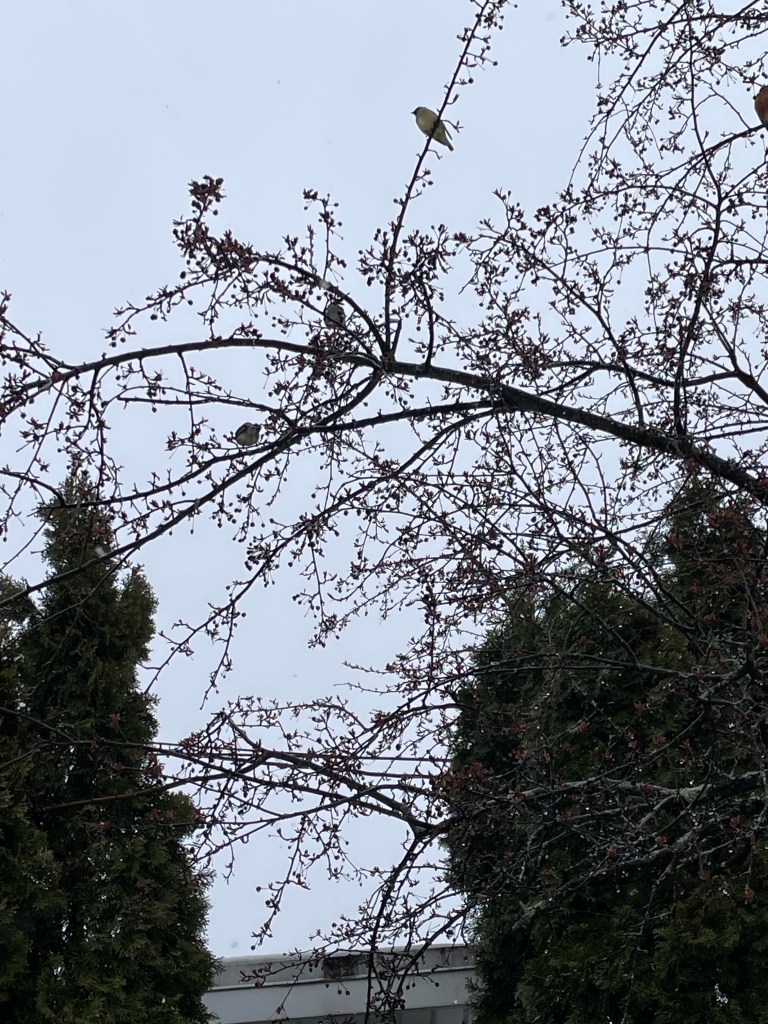
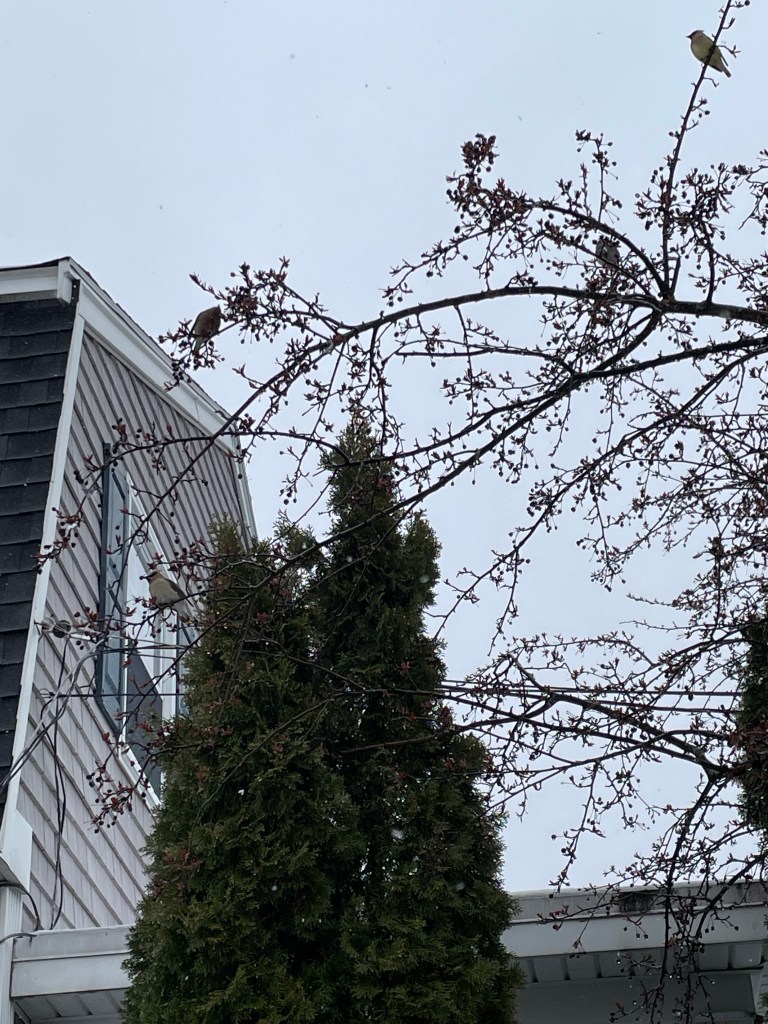
This is the kind of morning I am sitting in today. It is a low light morning, fully cloud covered, yet every item I see, every dangling leaf, trampled shrinking snow pack, squabbling sparrow, scolding blue jay, grey birch catkin is in sharp detail. It is interesting, although the day is not bright, dim does not suffice as a descriptor for me, because dim explains unclear. It is clear, clarion clear, but not bright.

This is February. This short month is a day longer this year. Why the name Leap Year? So I looked it up. In 45 BC, Julius Caesar first accommodated the apparently already known fact that the earth revolved around the sun in 365 1/4 days. Well it was not 1/4 but .242, so less than a quarter, which is .25. He added a day every fourth year to his Julian calendar. But his calendar had issues and eventually lost about 10 days. Pope Gregory in 1582AD established the Gregorian calendar and the date February 29th, named the year with February 29th Leap Year, and somehow fixed the Julian calendar 10 day deficit; i.e., there are certain years that, while ending in an even number, do not divide by 400 and so there is no February 29th in those years. Blah blah blah. But why did he choose the name Leap Year???

I don’t know. Do you? Some things are so immediately clear. So many things are not.

Why is there such clarity of relief on a dank day? What has made the air so very see through?

By Pablo Neruda
Poetry
And it was at that age….poetry arrived
in search of me. I don’t know, I don’t know where
it came from, from winter or a river.
I don’t know how or when
no, they were not voices, they were not
words, not silence,
but from a street it called me,
from the branches of night,
abruptly from the others,
among raging fires
or returning alone,
there it was, without a face,
and it touched me.
I didn’t know what to say, my mouth
had no way
with names,
my eyes were blind
Something knocked me in my soul,
fever or forgotten wings,
and I made my own way,
deciphering
that fire,
and I wrote the fire, faint line,
faint, without substance, pure
nonsense,
pure wisdom
of someone who knows nothing;
and suddenly I saw
the heavens
unfastened
and open,
planets,
palpitating plantations,
and darkness perforated,
riddled
with arrows, fire, and flowers,
and overpowering night, the universe.

And I, tiny being,
drunk with the great starry
void,
likeness, image of
mystery,
felt myself a pure part
of the abyss.
I wheeled with the stars.
My heart broke loose with the wind.

So This is Winter

Yes, it’s cold. And bitter in some places in this country, like Iowa….

The weather is, like most of our recent (recent related to decades-passage of time) daily experiences, a new paradigm. As yet, and who knows, maybe never again, not predictable, because prediction relies on past behaviors, patterns, and there have not been like patterns year over year, decade over decade. Perhaps we can be said to be in turmoil. Is a paradigm shift by nature tumultuous?

Then again, perhaps any change is tumultuous? Even any shift is tumultuous? Perhaps, is there life without tumult, without turmoil?

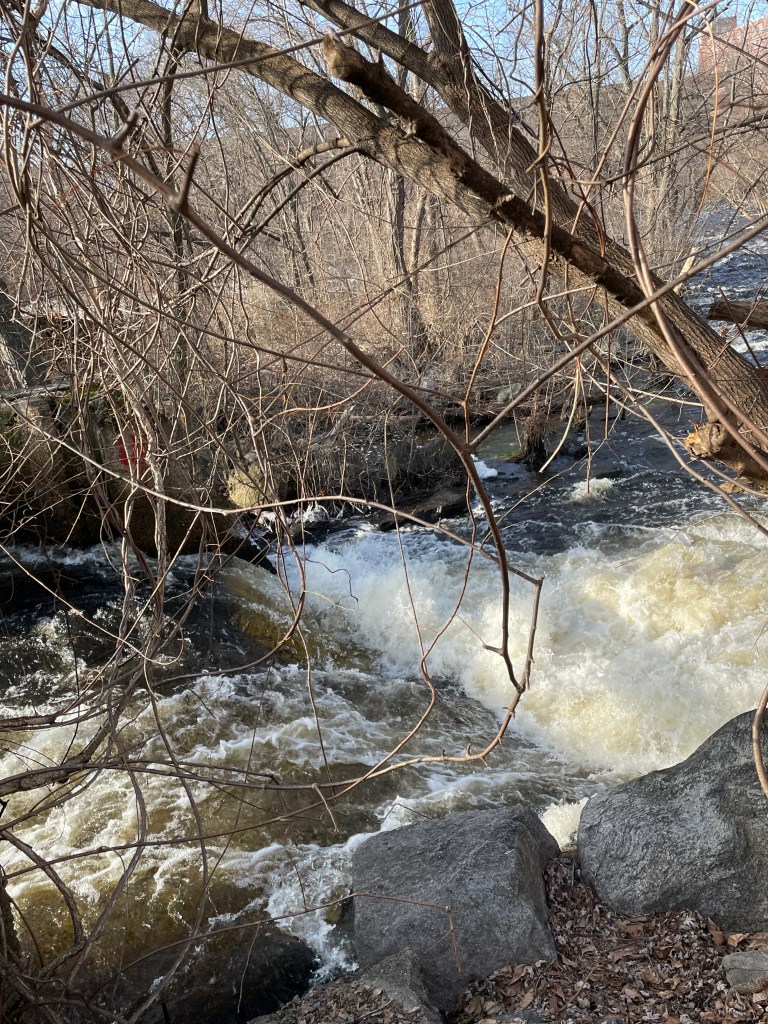
A river roars and rives
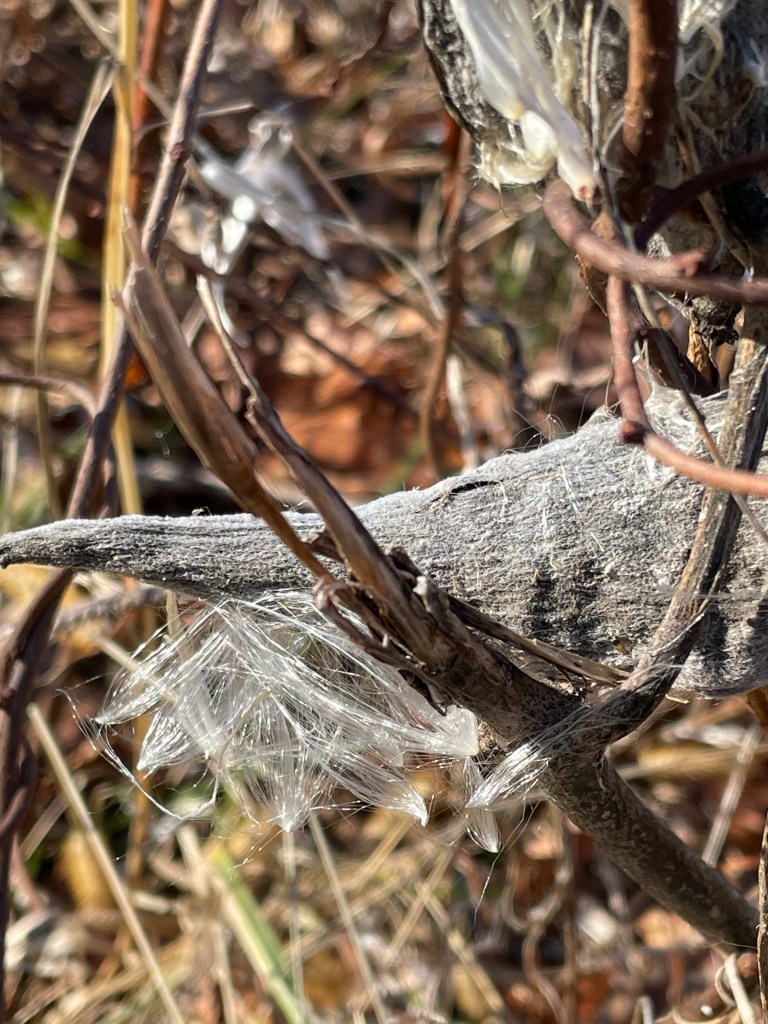
A milkweed pod riven open

I awoke to 14 degrees fahrenheit, three hours later it is 17 degrees fahrenheit. I can bundle up. Oh, for those who can’t, who haven’t the how to or the what to with. For them I hurt.

Without the season, without in this region, cold and hot, that which grows here, that which is the basis of sustenance, eventually cannot and cannot be. I feel the need and bow to it, to proclaim the importance of what is natural. What was created ahead of persons; what, by some accounts, accounts I trust, was entrusted to persons when persons came to be, to care for; i.e., respect, work with, live with, share within, assist in thriving, and receive assistance in thriving, because no entity here is without need of others, and any entity can benefit others. I need, also, to assist as I can, those of us who haven’t who can’t.

In my last few posts I seem to have elected me teacher. To the choir, I apologize. To the offended, I am sorry for you. To any who may choose to learn, or to consider, or to carry forward, I thank you.

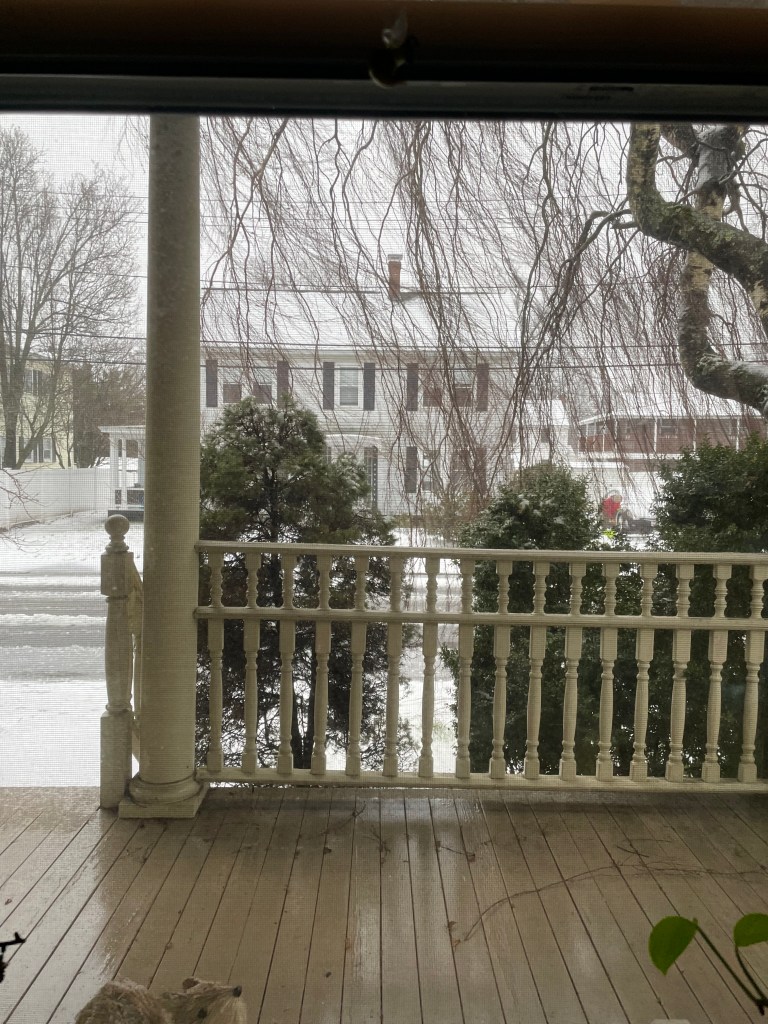
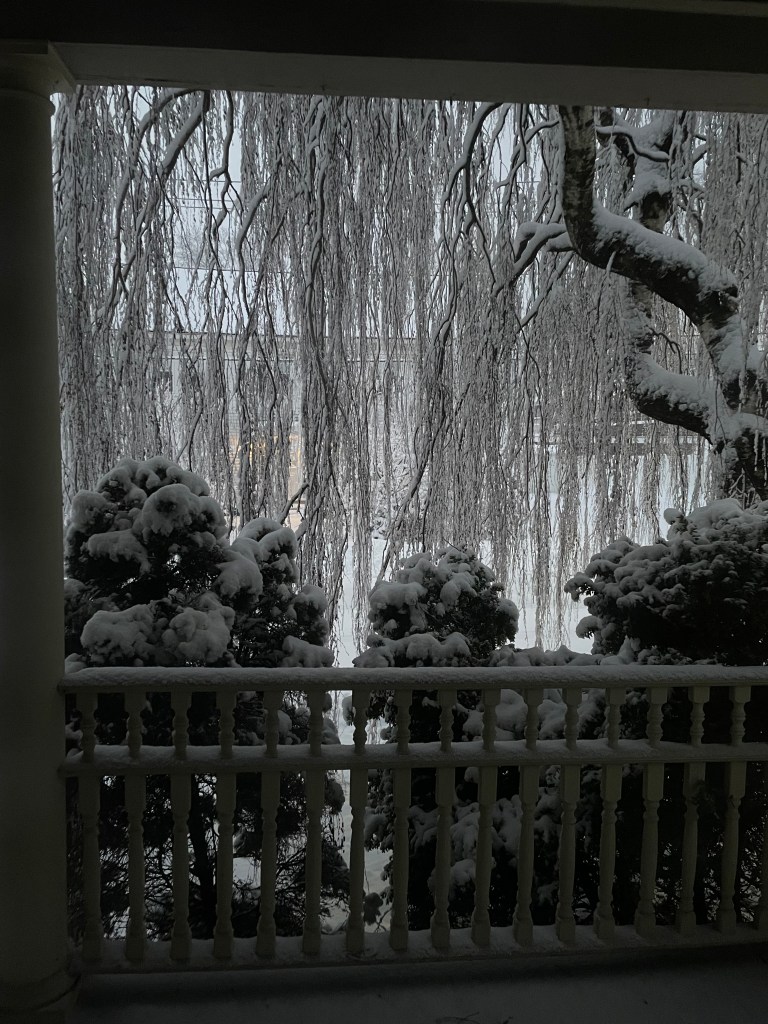
curtain of weeping birch

_______________________

Sonnet 64

When I have seen by Time’s fell hand defaced
The rich proud cost of outworn buried age;
When sometime lofty towers I see down razed,
And brass eternal slave to mortal rage;
When I have seen the hungry ocean gain
Advantage on the kingdom of the shore,
And the firm soil win of the watery main,
Increasing store with loss, and loss with store;
When I have seen such interchange of state,
Or state itself confounded to decay,
Ruin hath taught me thus to ruminate,
That Time will come and take my love away,
This thought is as a death, which cannot choose
but weep to have that which it fears to lose.

William Shakespeare

Here we are

In the balmy arms of 2024.

They promise a snow storm this Sunday here — unless it is a rain storm. Well, come weather, come hither, we are powerless to undo what our history has done. We have the power to not repeat it. In not repeating it, we also can take the power to repair. In the morass of our reparable (I continue to hope we have not entered ir-), we can repent, which means, stop, look around, change what I do so not to repeat that which is so much better not repeated.

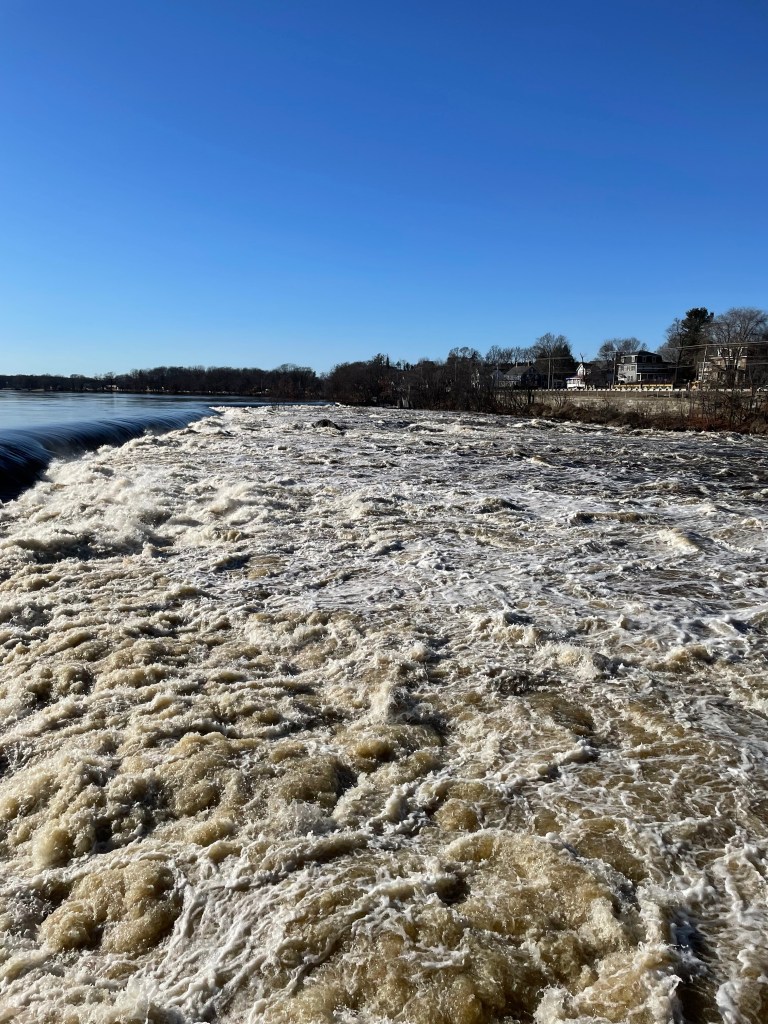
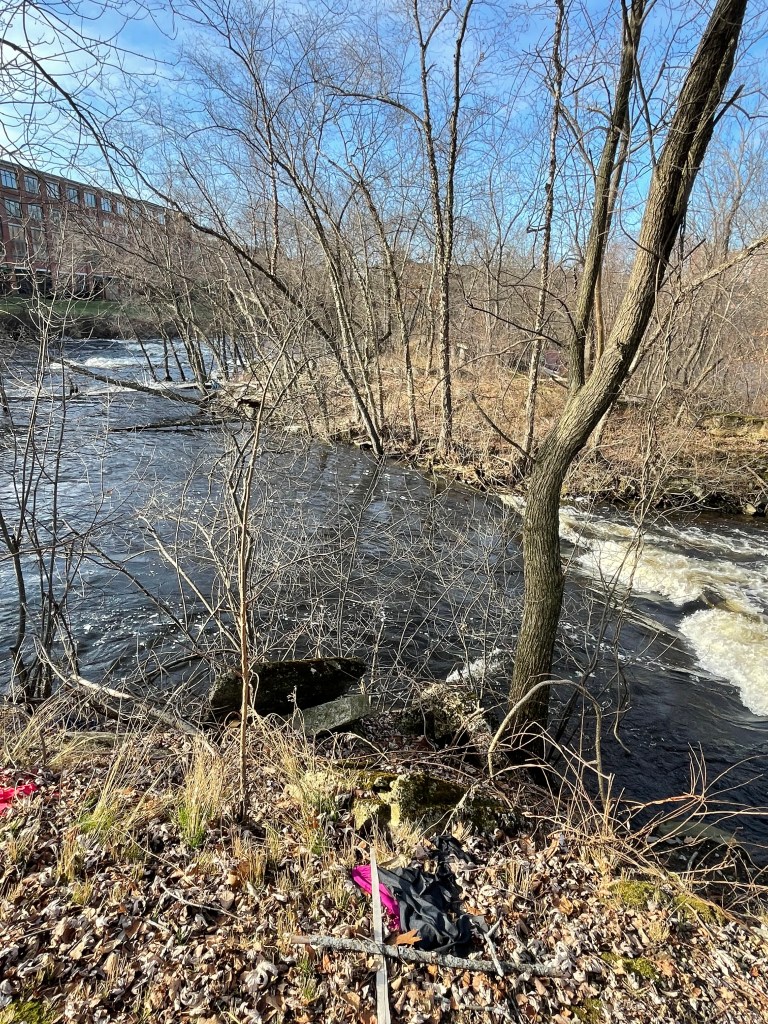
Today began with sun. I took it up. I meandered through this city to eventually reach our second river, the Concord, which flows into the mighty Merrimack. The Concord was pretty mighty itself today.

At this point the Concord splits around a small island, one which once housed something, undoubtedly industrial, but which now, in the manner of ancient pyramids, is pretty effectively disguised by good green, tree, shrub, pebble, and mycorrhizal growth. This water flow is the eastern side of that island.
Here we are further back, at the point of split. Closer to me is the section in the photograph above, further, the western half of the split. Close to me also, is the ubiquitous human dropped stuff.

As I walked, the sun was stupendous. As I walked, by the second hour’s close, the temperature had risen 10 degrees from the 31 degrees fahrenheit that it was at 10:00 am. And it is 43 degrees now. Uh oh. But my phone promises temperatures falling hereafter today. (Well, I guess that is the normal weather pattern anyway.)

Have you ever wondered why we spend so much time keeping busy? Are we made that way? I think of ants, of bees, their lives. How is it that we have modeled our lives, our priorities to busy? Is it so to acquire? Why? I think ants and bees are making a home, and feeding their colonies. Busy. Yes, but they don’t seem to need to increase the footprint of their home, or the glamor of their home; they don’t need to import exotic foodstuffs, they gather what is nearby and use it. Not us.

Why not?

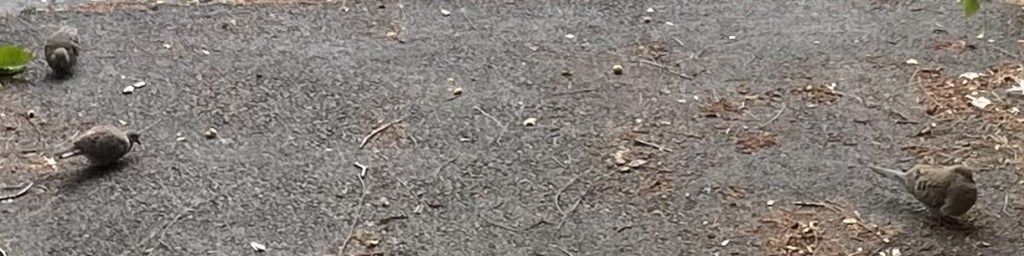
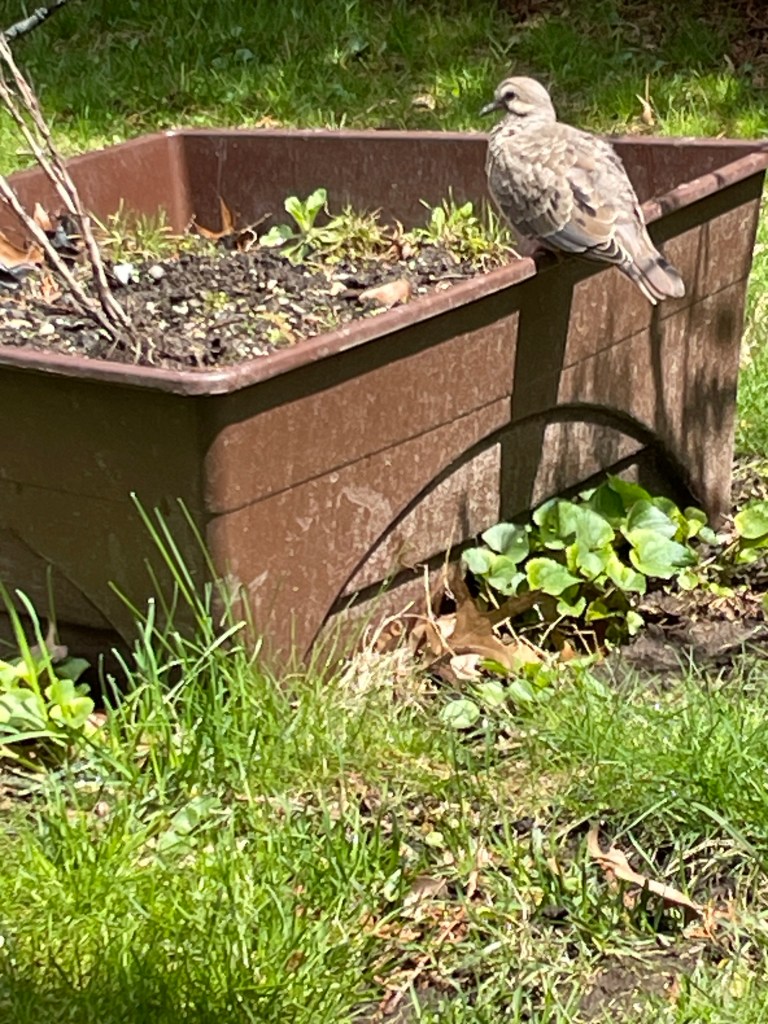
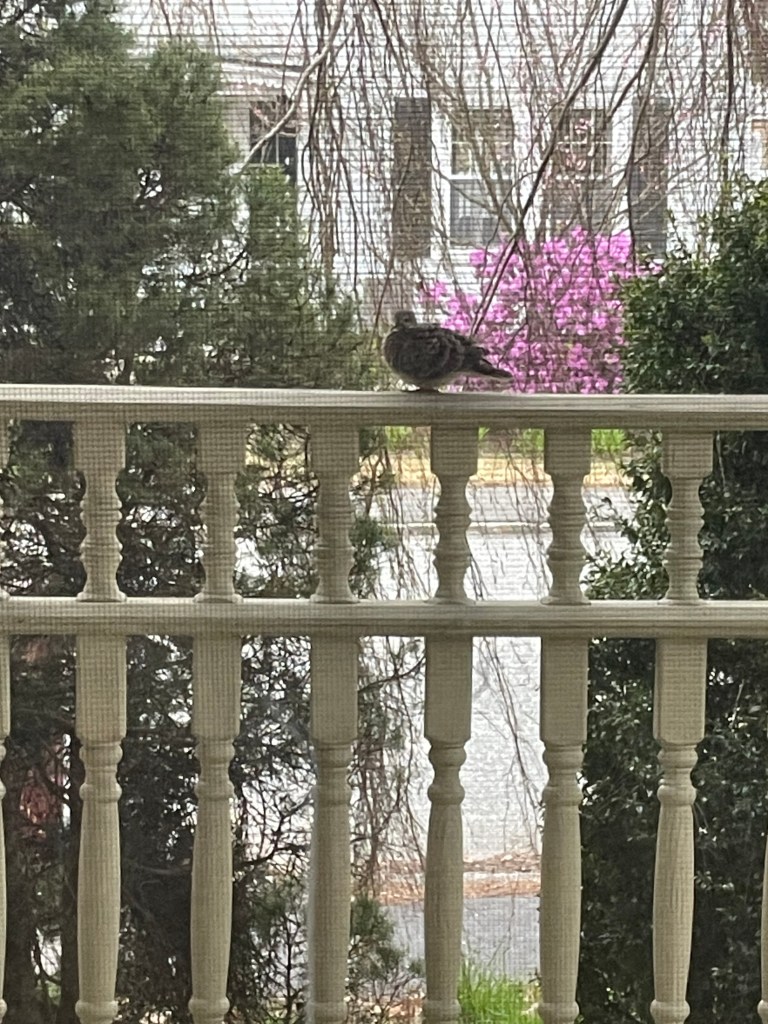
Birds. Local materials for food and for home.

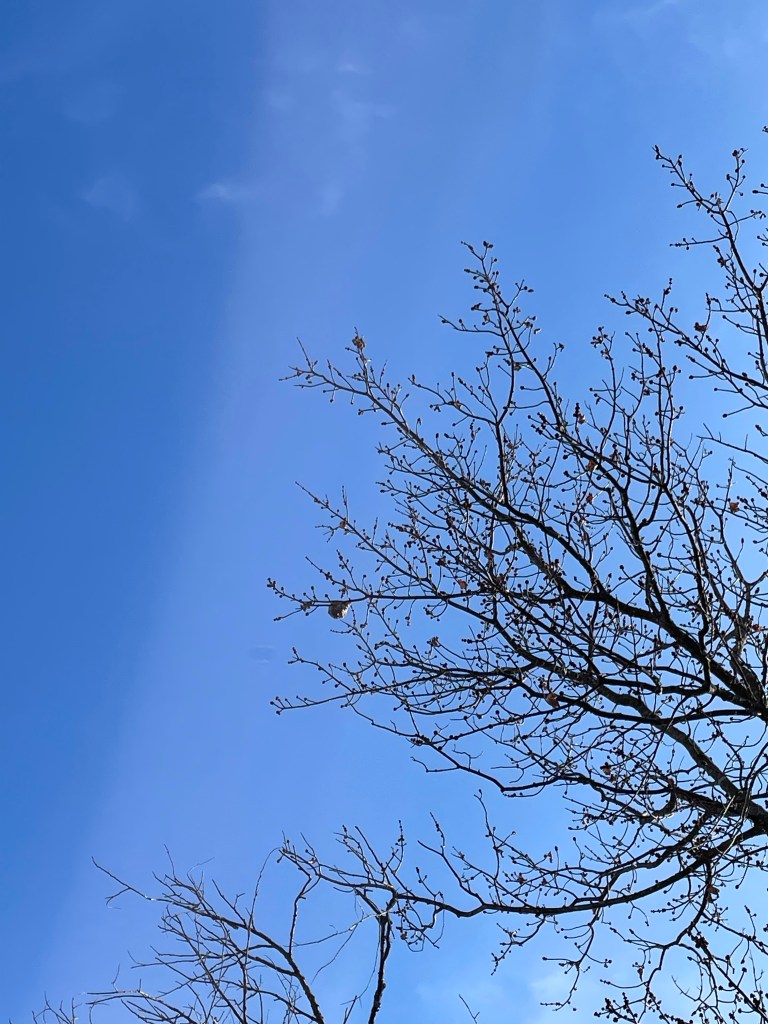
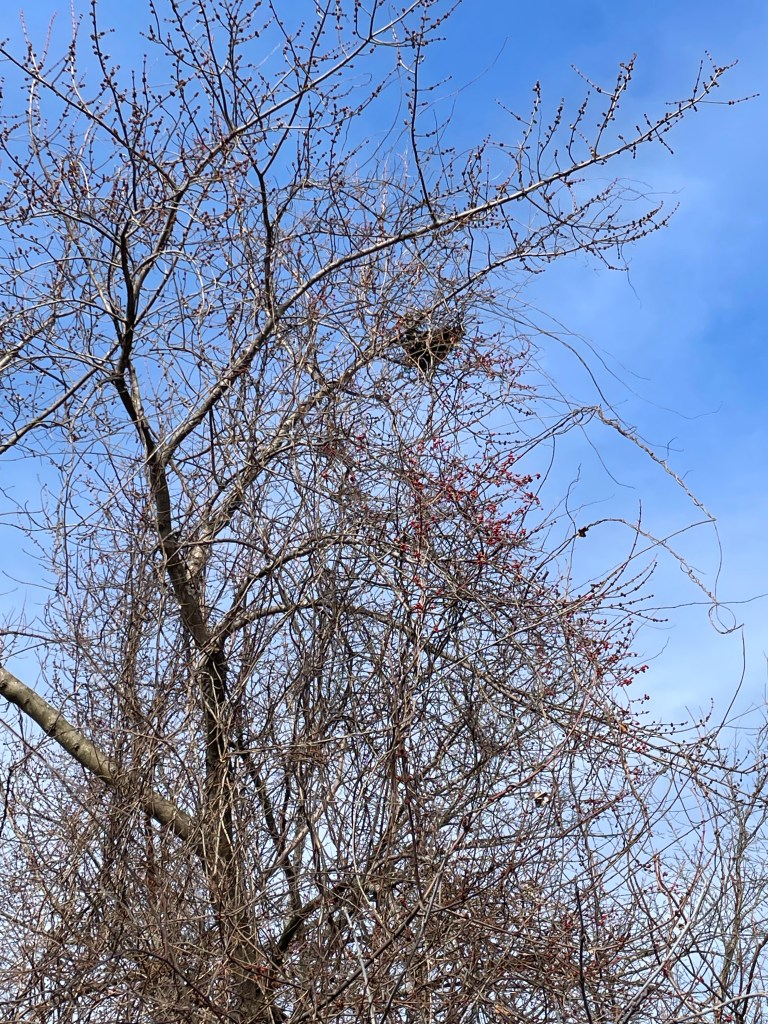
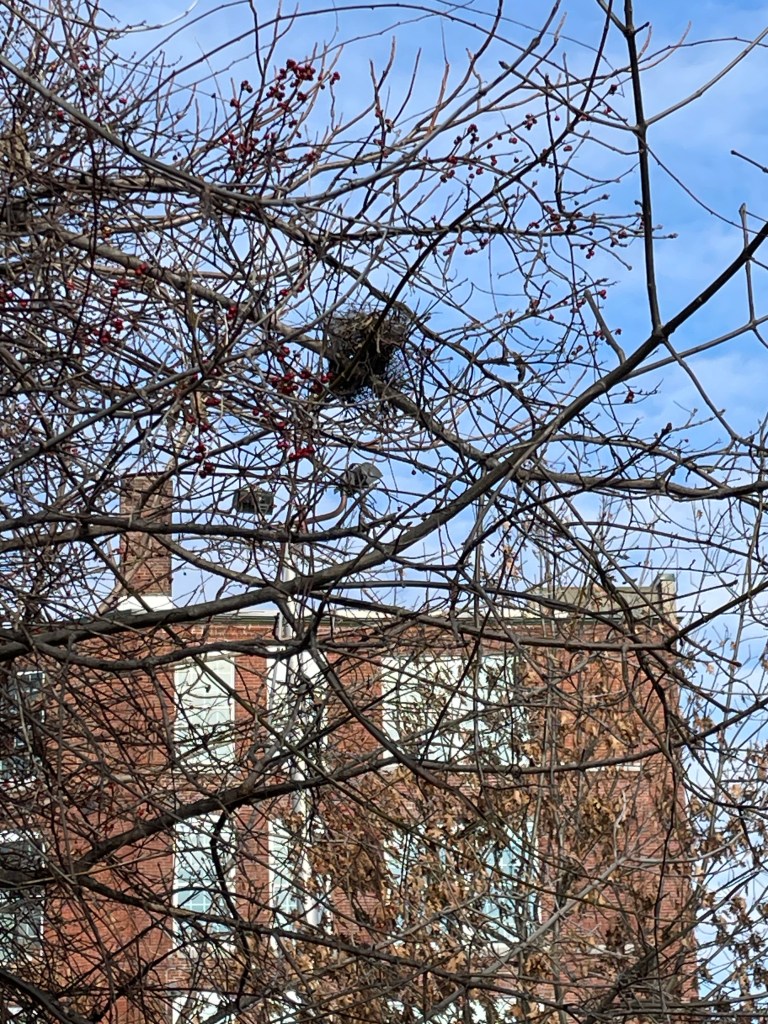
Birds, times four.
Humans

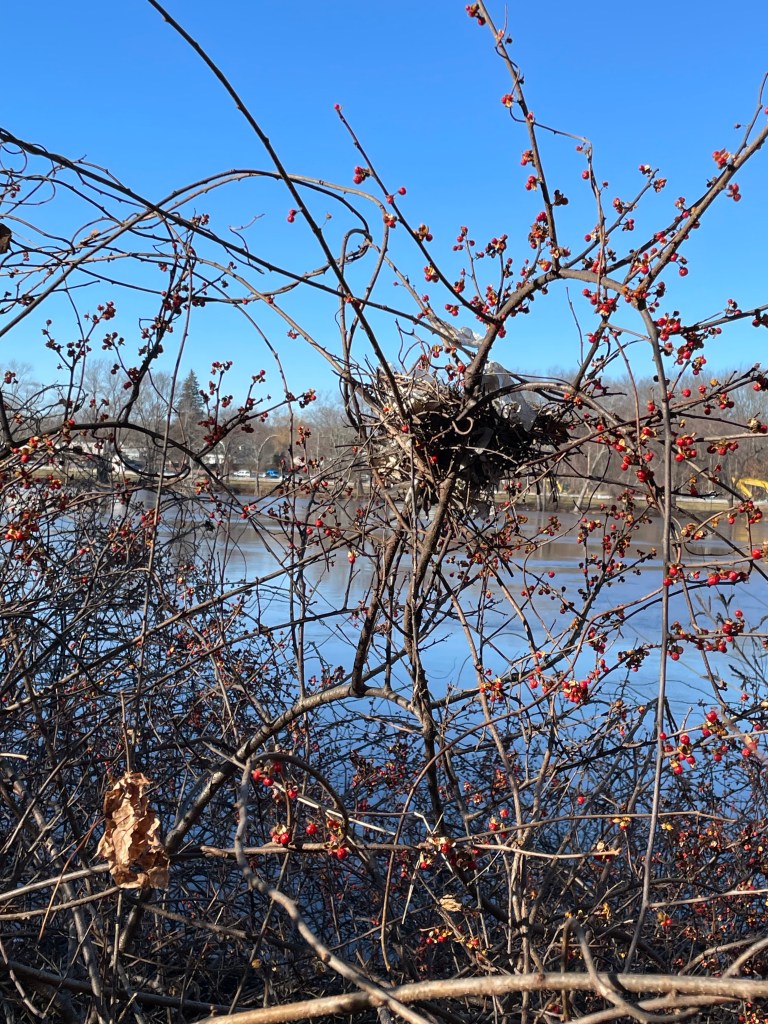
I just noticed, three of the four bird nest photos include trees that are being aggressed on by invasive bittersweet. Ah me. Our footprints are large and heavy.

So here we are in 2024.

May its surprises include repentance, attendance, grace, and forgiveness.

What good can we effect, will we do that never occurred to us to do before? And where? And how? What goodness can we receive that it never occurred to us that we could?

Can we believe in each other? Can we count on one another? We can. Will we? Why not? Why not?

Baby it’s not cold outside

You can guess where my thought process is going from this title, on Saturday, December 16th, 2023, 5:19am and I am sitting at my desk without feeling even a little cold. Granted the heat is coming up, but that’s because it’s 5:19am and the thermostat timer said it’s time. It is New England. It is days before the winter solstice. It is 5:19am and it is already 35 degrees farenheit. It is too warm.

What US state is the floating piece of Antarctica compared to in size? I think it’s Utah. And the Arctic is experiencing rain!

Hunker down. Sell your snow blower to someone on the moon of Neptune that I just heard has been determined to maybe being supportive of “life”, whatever that means. For certain, it will be colder than here.

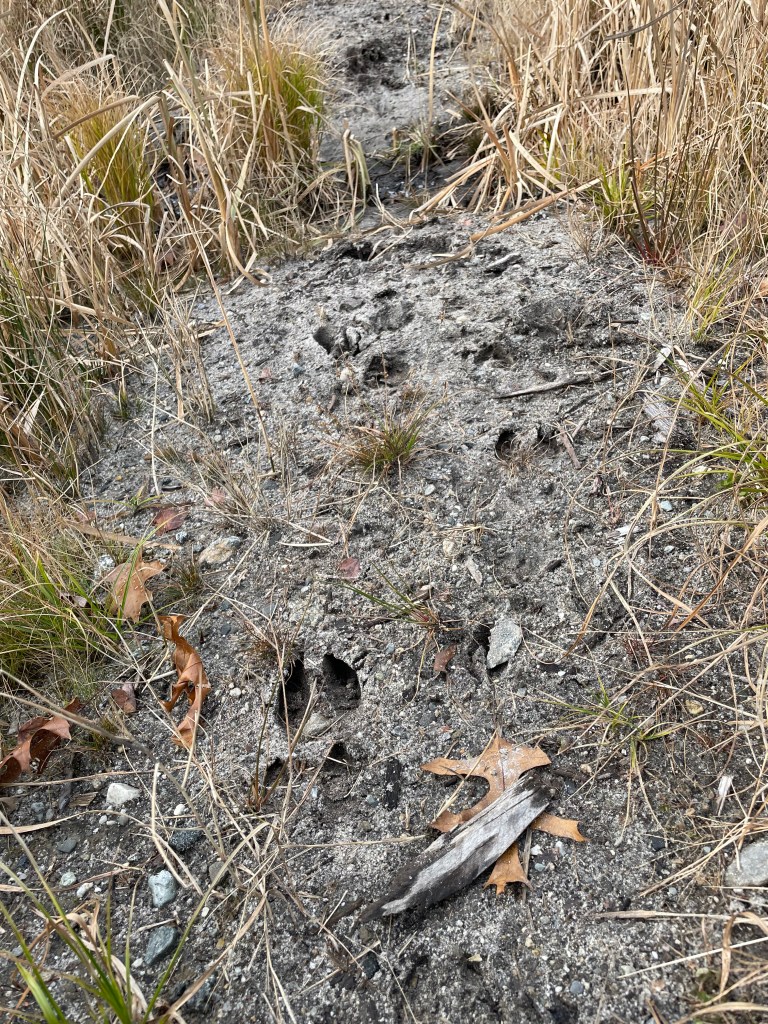
Last week, I “tracked” a deer in the utility cut. Its footprints were easily followed in the soft mud. I should be seeing them in snow, or, not at all because the ground would be too cold to soften.

All right. I’m blue. I’m sorry.

Let’s start again.

Last night I was headed to friends’ house. I was going west. I was following the most lovely, clear reclining crescent moon that I have seen in a long time. It held there in the clear night, in the lower western/northwestern sky like a smile. It led me to my friends’ house and then ducked behind a stand of trees that border their property. Thank you.

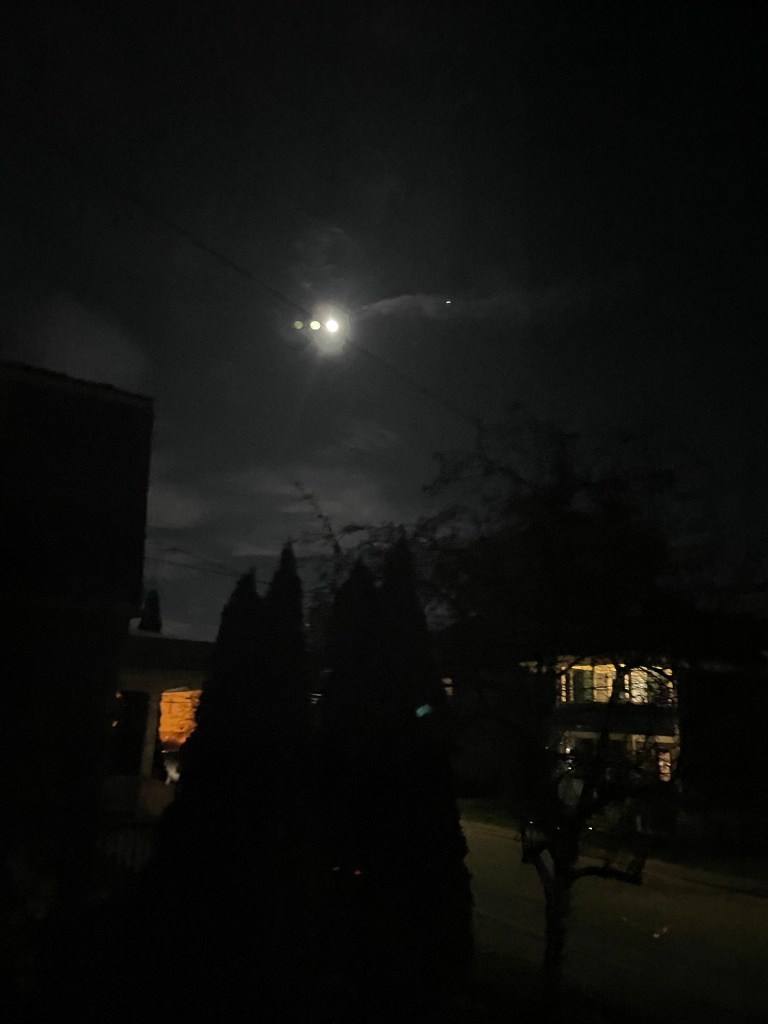
I did not photograph it, (nor did get up the night before and the night before that at 1:00 to see the meteor shower, I slept through) but I did capture the recent full moon with Jupiter off to its side.

It’s not a great shot, and the moon appears in triplicate, a trick caused by my double pane windows I think, but it is the radiant full moon and its echoes to its left, and off to its right Jupiter from out a livingroom window.

This morning I obviously am preceding sunrise. Usually, these days, when sunrise, regardless of earth atmospheric upheaval, predictably occurs a bit after 7:00 am eastern standard time, usually I am raising the shades and opening the blinds. I love the free entry of sunlight. I love it so much that sometimes I end up in the dark early in the evening (in the winter; late in the evening in the summer), because I am in it and haven’t noticed that indeed it, here in Massachusetts, is no longer visible above the western horizon. In part that is because my personal western horizon includes quite a few rooflines and a nice number of trees, so the sun sets before it is sunset. It’s okay. I love sunlight and it stays with me, in my being long after its daily physicality has completed the up half of its cycle.

My, how I am wandering.

It is now 5:50am. I just heard a car drive by. When I was growing up, our apartment was above a NYC bus stop. There was never not a vehicle driving, stopping, wheezing, outside the windows. But most of our windows faced south. So the days brought sunlight freely, although my mother, as many do, had “sheers” hanging in front of the windows. Not for me, sheers.

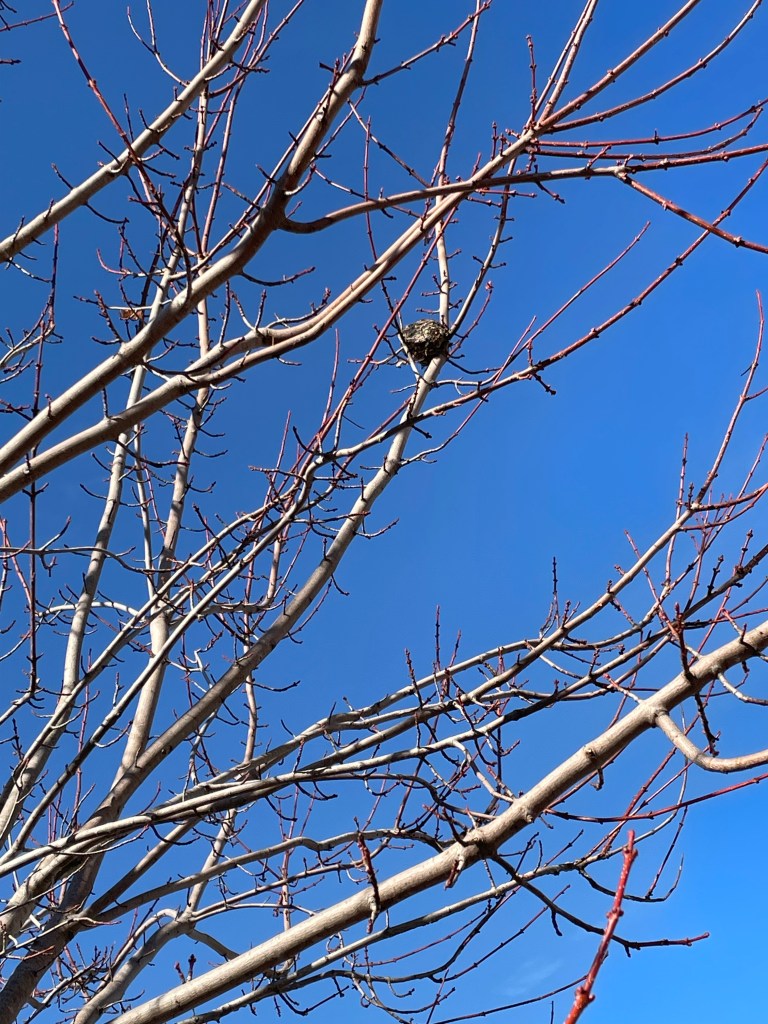
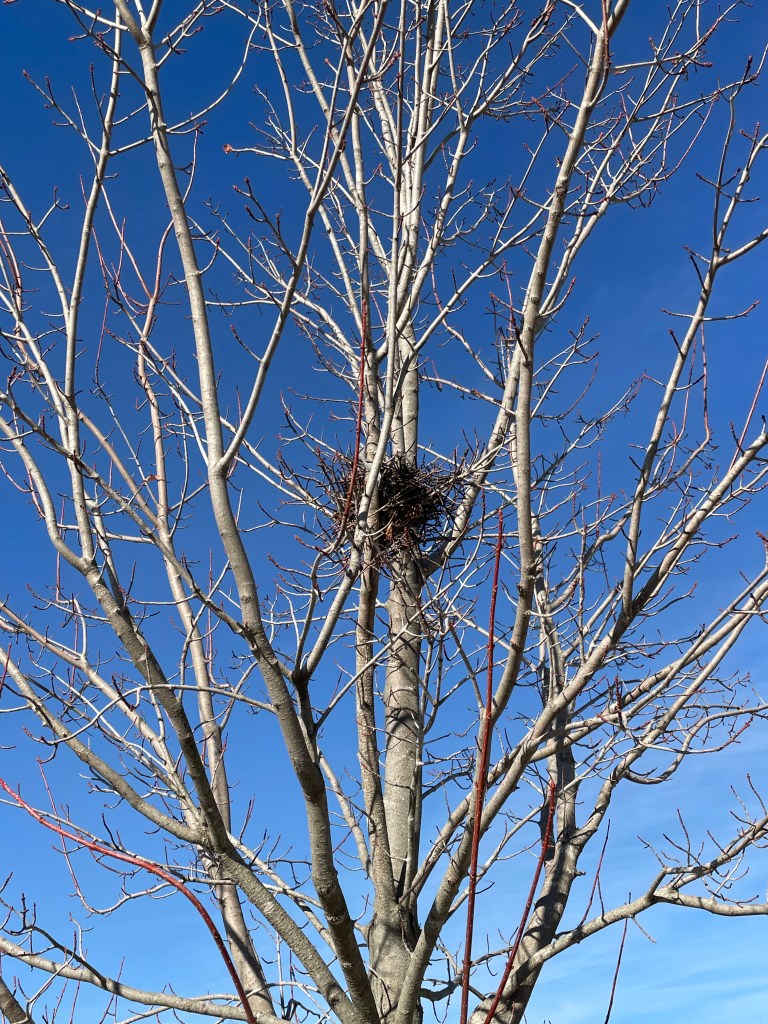
Here are the homes of a couple of locals:

I call them homes, but perhaps they are former homes. Some birds remake nests each breeding cycle, some stay in the same one. I don’t know which nor why. Something to study!

___________________________

Love the Lord your God with all your heart, with all your mind, with all your strength, with all your soul. And love your neighbor as yourself. (Mark 12:30-31, slightly paraphrased)

Pre-dawn November

Good morning. This is one of those that I haven’t endured in awhile. It is 3:05AM. After lying awake for an hour and some minutes, I said to myself, if Maria gets up from her head against my leg, I will get up and write a post. It has been a month. This was a done deal, because Maria always gets up and leaves the warmth of bed at least once that I have noticed, in the times I would awaken for no reason other than that I awoke, within the middle of the night to go downstairs and use her box, or into the kitchen to drink some water from her bowl, or, perhaps just to prowl the house and to check on the whereabouts of Stella, who, six times out of ten, will be snoring on the couch. Both my cats snore.

Lately, I’ve been rereading a book by Wendell Berry. A book named The Long-Legged House(1). There is a chapter named, The Rise. It is about a flooding Kentucky River one year in, I think, the 1960s. I want to give you a paragraph from it (pg. 106): “If one imagines the shore line exactly enough as the division between water and land, and imagines it rising–it comes up too slowly for the eye usually, so one must imagine it–there is a sort of magic about it. As it moves upward it makes a vast change, far more than the eye sees. It makes a new geography, altering the boundaries of worlds. Above it, it widens the freehold of the birds, below it, that of the fish. The land creatures are driven back and higher up. It is a line between boating and walking, gill and lung, standing still and flowing. Along it, suddenly and continuously, all that will float is picked up and carried away: leaves, logs, seeds, little straws, bits of dead grass.//And also empty cans and bottles and all sorts of buoyant trash left behind by fishermen and hunters and picnickers, or dumped over creek banks by householders who sometimes drive miles to do it. …”

I woke up that hour plus ago with a thought about wisdom. Wisdom is available to everyone. Wisdom can be received. It can be mulled over. It can be imparted. To, within, from each of us.

But so, too, can ignorance. By the same participants.

We can be wise, and, sadly, we can be not wise.

Can you see the subject of this picture? Look deeply into the center.
How about in this picture?
Perhaps you can, perhaps you still can’t. It’s sea lions on that rugged rock off shore in the rough sea under the blue, blue sky in the picture just above.

Again from Wendell Berry’s The Long-Legged House: (pg. 60) “Since 1945 it has been generally acknowledged that the world is our dependent. It has been acknowledged, that is, that it is the dependent of those governments capable of atomic holocaust{or myriad holocausts, I would add}. But it is becoming more and more apparent, as we continue to contaminate the soil and water and air and to waste and misuse the natural wealth, that the world is also the dependent of private organizations and individuals… Because of the enormous increase in the economic and technological power of individuals, what once were private acts become public: the consequences are inevitably public. A man on a bulldozer can scarcely make a move that does not affect either his neighbors or his heirs…. {or this planet}

(pg. 61) “A community is not merely a condition of physical proximity… A community is the mental and spiritual condition of knowing that the place is shared, and that the people who share the place define and limit the possibilities of each other’s lives {and all created life}. It is the knowledge that people have of each other, their concern for each other, their trust in each other, the freedom with which they come and go among themselves.”

(pg. 63) “…For man is not merely “in” the world. He is, he must realize and learn to say or be doomed, part of it. The earth he is made of he bears in trust.”

_______________________________

(1)Berry, Wendell: The Long-Legged House, copyright 1965, 1966, 1968, 1969; Harcourt Brace & World, Inc. NY

Words

It is ending October. One more day after this one. I note the date for reasons of my own that have nothing to do with All Hallows’ Eve festivities. On Wednesday morning, when I wake up, it will be November 1st. This becomes a new morning. Have you ever heard Bob Dylan’s song, New Morning? It has leapt into my head with typing these words. It’s actually the title track on his album of that name, which came out (I looked it up), funnily, in October 1970. I remember buying it new, vinyl, hot off the press. I still have it, but no longer the mechanical means to listen to it, the vinyl album. A shame. But a choice. For neither have I the receiver to capture the tones from the record on the turntable, nor the audio speakers wired to the receiver to enable Dylan’s then young, comprehensible voice to fill the room I am in. I do have, in my head, him singing it, and I am enjoying it.

Can’t you hear that rooster crowing? / … So happy just to see you smiling/Underneath the sky of blue/On this new morning, new morning/On this new morning with you.

Bob Dylan, New Morning, album cover

Speaking of words. I was thinking about words today, and writing. This time it is because of the novel I happen to be reading. It is a novel of beautiful, beautiful turns of phrases, and choices of words to describe action, to describe environs, and words to insert history that feeds/backstory’s the events of this particular novel’s story and main protagonist. It was, for the first 1/4 to 1/3 a novel that in this beauty and story pulled me along breath-held at how palpable and personal it was. I am now about halfway through. I am pausing. I am looking for something to do–Oh, I know, I say to myself, write a blogpost! The novel has lost my being and holds now only my eyes, as they skim the words, hoping for an insight into the protagonist and into her story that will grab them again and hold them steady, slow, in awe as it talks, and holds them between its very hands so they don’t blink and miss something.

Do you see what I did there? I was going to write a paragraph about how in the past few years I have read more than a few novels that have, with beautiful scene setting, magnificent phrasing, off-balancing themes, caught me up in paragraph one, and held me longer than the story being told could have on its own merits. So, you say, they did well!! No, because the bottom did fall out. I did stop reading despite the words that were as beautifully shaped as a work of visual or tonal art. I lost interest in the story. Or in the protagonist. In such cases, I am especially disappointed, because the artistry promised so much. It is like the carapace of a gone butterfly–no longer growing, promising caterpillar, and nowhere the dusty, iridescent wings present to be admired.

Do you see what I did there? I got caught up in my visuals. My similes. My metaphors. My images. I got caught up in Kate the writer.

This is what these disappointing novels–novels of artifice and poorly told, or absent story, or worst!! buried story–do.

Look at me! A literary critic!

No credentials. Consider my expressed thoughts, or not, as you wish. Thanks for reading this far.

And as a small, additional nudge, I find that literary criticism is also becoming a form of beauty that wanders far away from its reason for being. I spend my time, while trying to read this critique of a particular book or writer for insights into the book or writer, looking up words for what they mean, and puzzling out allusions for what their insiders-only message might be.

That is it for today, for the second to the last day of October 2023, a month of deep sadnesses around the world. May we remember them to encourage not repeating them, to not repeat them.

Life

Good aftermoon! While I type this at 2:51pm Eastern time, someones somewhere in the north american northwest is, I believe, viewing the annular solar eclipse. So, pun intended. Here in northeastern Massachusetts the clouds have slid in, so even if an edge were going to hint at the solar-lunar event, clouds get in my way (who sang that, Judy Collins? who wrote it, probably Joni Mitchell).

This morning I went on a sustainable-routes walk in and around the east campus of UMass-Lowell, which borders the Merrimack River, the Merrimack Riverway Walkway, the Northern Canal, and borders and/or has acquired and repurposed a former nursing home/geriatric facility, hospital outbuilding, and factory buildings into classrooms, dorms, offices, an outdoor activities and bicycle shop, an alumni services building, transformed a grass swath into a pair of 1800 square foot green houses that it manages with a local farm management/food security nonprofit. There was also a discussion in her tour for us of the original dwellers of the shores of the Merrimack River, those indigenous communities who like everywhere in this country, in every country where colonialism took root, were rooted out.

We learned a good deal more about the neighborhoods, the past and future of the area, all located in the need for and the work towards ensuring sustainability and the many pockets of responsibility that word lands in, but I will stop here and provide no more descriptors that would be helped by photographs, and apologize, because I didn’t take any. So use your imaginations, and whatever impression you first garner, ratchet it up a level or two. The university, like the city, is mastering reuse, not perfectly, but increasingly.

I should also note that the guide, a newly graduated UML student and now UML-Graduate School student gave us a statistic pertaining to the greenness of Lowell, touting the large number of trees herein. I will not dispute her, but I would wish that there were many more trees, grouped in pockets throughout the city–grouped for purposes of supporting each other, and linked to other pockets in that distances between pockets are minimal, and assisted by something that is missing in a big way in this city, street trees. Native species.

And from there I go to where I went next. I went to a walkway halfway across the city that attends the Concord River. I entered the way just upriver from the mouth of the Concord River, the mouth being where it pours into the Merrimack River. I went with purpose of observing birds, because today is Fall Big Bird Count day to coincide, I would say a bit late in the cycle, with the birds’ fall migrations to their winter homes (there is definitely truth in assigning the appellation “snow birds” to northern USAers who travel south in the winter months). In the past several years I have participated in these–the fall one and the spring one. Never have I observed such a dearth of birds as I did today.

This is not good.

A wind broken norway maple subsequent to a recent wind with rain storm. Out of picture in this corner park/greenspace there are five red and black oaks, and another norway maple. It is a pleasant space. But it is all too rare. Also, there were once two large linden trees near it (I am pretty sure I talked about them several years ago), one ill one not, they ultimately were taken down, I am guessing both, for some misguided aesthetic sense, and eventually replaced with three ornamental cherry trees…
There have, this year, been abundant raptors about the city and along the highway corridors that border and cross this city. Perhaps they, in part, along with storms that rip down tops of large maple trees, explain the absence of song and yelling (e.g., jays) birds around now. But they are part of the cycle. So more, I think, it is things like several 80 degree F days in September and October here in Massachusetts, and more than several rainstorm days (all of which I have discussed before, I am sure you are telling me if you are still reading this! But it warrants repeating. And action by each of us, in small, medium, and big ways)

So this has become a blog post in which the photograph captions are as long as the textual paragraphs. What does this mean? I am not parsing. And you are having to deal with it. Oh. Well, you can, and may have already, stop(ped) reading.

Go outside, see if you can see a change in light of any kind related to annular eclipse.

See if you can spot birds in your local trees, at your feeders, on your neighbor’s roof. I pray you are successful. I think I’ll go out and check again myself.

Closing Out September

Good Saturday morning. It is early. It is cool. I have had a cup and a half of coffee and am considering brewing another pot. (French press; I brew enough at a time that it is marked on the pot as 3 cups, but I only get 1 1/2 cups/mugs per brew, and some days I just love coffee especially much. Today is one. I’ll be back shortly.)

Tomorrow, I just read, summer returns–into the 70s here, and 80s by Tuesday. Across the street my neighbor’s brother’s Honda Element is parked and carries a pink bicycle on a carrier. The tires are even pink! Three, no four, no five shades of pink on that cycle–seat, basket, frame, pedals, tires. Only the handle bars are chrome. I am surprised there aren’t tassels streaming from the handle bar ends. Oh, there it goes –Element driving away toting the pink bicycle. I guess someone has been to see the Barbie movie. I have not. Have you?

So, where am I going with this? I am at sixes and sevens. Where does that expression come from? I looked it up. Many uncertain responses (how appropriate): The wikipedia one includes: “It is not known for certain, but the most likely origin of the phrase is the dice game “hazard“, a more complicated version of the modern game of craps.” Michael Quinion, a British etymologist, writing on his website on linguistics, says, “It is thought that the expression was originally to set on cinque and sice (from the French numerals for five and six). These were apparently the most risky numbers to shoot for (‘to set on’) and anyone who tried for them was considered careless or confused.”

And further, still from the Wikipedia entry: “A similar phrase, “to set the world on six and seven”, is used by Geoffrey Chaucer in his Troilus and Criseyde. It dates from the mid-1380s and seems from its context to mean “to hazard the world” or “to risk one’s life”.[2] William Shakespeare uses a similar phrase in Richard II (around 1595), “But time will not permit: all is uneven, And every thing is left at six and seven”.

These explanations leave me just there, at six and seven, or am I at five and six? The choice leaves me at sea! Well, I will decide, since I am writing in the English language, I will stay at sixes and sevens. Although cinque et sice rolls off the tongue nicely, not having to use the throat as gutturally as sixes and sevens. Say them out loud, I think you’ll feel what I mean.

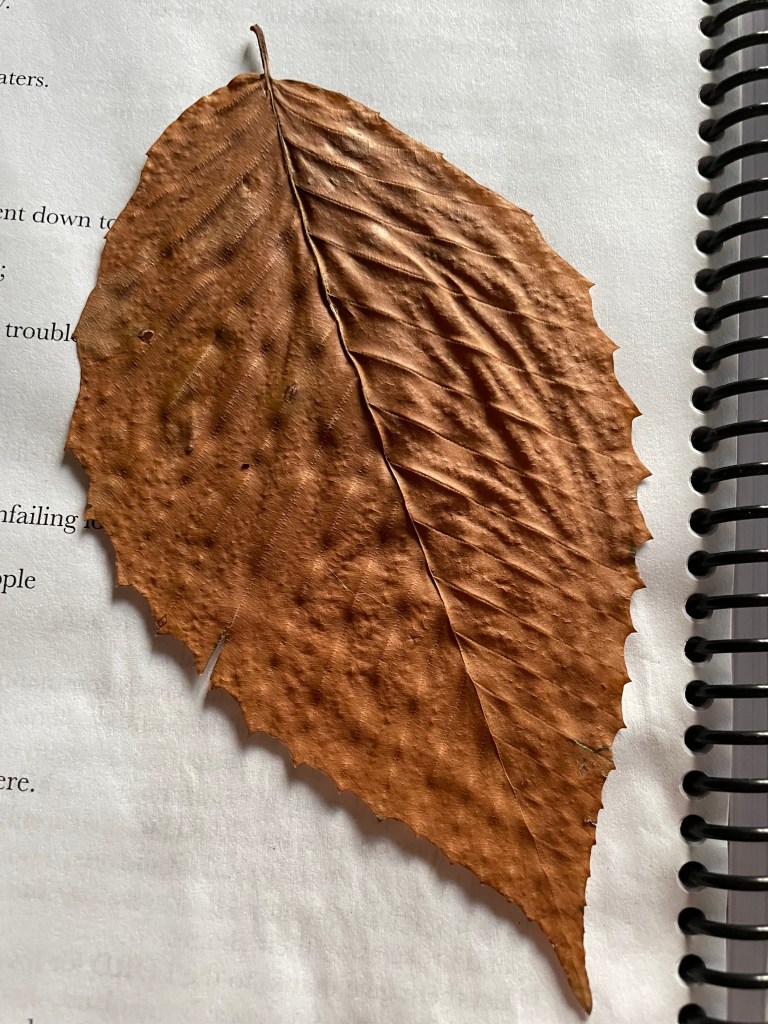
You know, we’re in a lot of trouble in this world. I stew over it. I plant little trees all over the place (very little, so that public works people won’t uproot them as wrong for the place, as not likely to thrive.) My backyard the willingest recipient of my experiments. And in among the plants I have in pots in the diningroom I now have four beechnuts in pots. I have faith one or all will emerge. I don’t know.

Beechnuts front and center here. Behind them, closer to the window, yet another avocado pit I am trying. Behind them to the right, a prayer plant…. then lots of swedish ivy and a coleus I am trying against all odds to keep going.

I also pushed a fifth beechnut into a pot in the backyard, the pot right next to the pot of rosemary, which is next to the pot of sage, which is next to the pot of tomato and basil.

Here is a painting I would like to share. It is called Braces’s Rock, and is painted by Fitz Henry Lane in 1864.

I saw it and was captured. I stood in front of it at the Cape Ann Museum for, oh, ten or more minutes. Paused. Immovable. At peace. And yet: Brace’s Rock (Brace’s Cove) is historically one of the worst sailing hazards on the entire New England coast. “It deceptively appears to be an entrance to Gloucester harbor. Nowhere on Cape Ann is the illusion of a peaceful ocean more pronounced that Brace’s Cove seen on a still summer afternoon.” (from Brace’s Rock Series written by Sam Holdsworth, in an online project under the direction of the Cape Ann Museum) For just that small space of time just I standing before that small ripple of water, that strand of beach. Inattentive to the beached, broken boat.

Oh the places I could go with a conversation about this. What do we see when we look? What don’t we? Do we not because we turn? because we blink? because we won’t? or because we can’t?

But I am stopping here. Because I began with a cool, early morning. The morning has aged two and a half hours. I just had a visit from some local faith based visitors. They have come to my door before, with tracts and smiles and Jehovah. We converse. They will come again. We will converse again. They are very nice. They are ardent. As am I in what I hold as my story with God.

As I am in what I wish.

May we find peace. May we understand love. May we give it.